

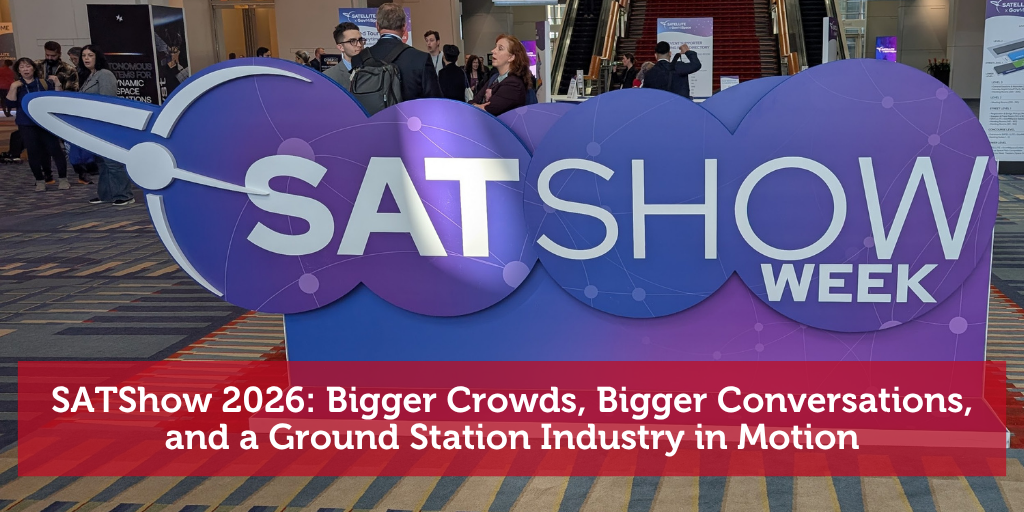
Last week, the Radeus Labs team headed to Washington, D.C. for SATShow 2026 at the Walter E. Washington Convention Center, and by every measure, this year's event delivered. The show was noticeably bigger than previous years, with a wave of new names on the exhibition floor and a palpable energy that reflected just how much the satellite industry is evolving right now.
On the Floor
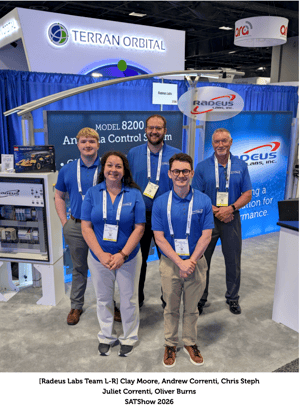 Our team, including CEO Juliet Correnti, Senior Engineer Andrew Correnti, Technical Sales Rep Clay Moore, and our Satcom sales team with Chris Steph and Oliver Burns, spent the week at our booth connecting with operators, engineers, and both new and longtime partners.
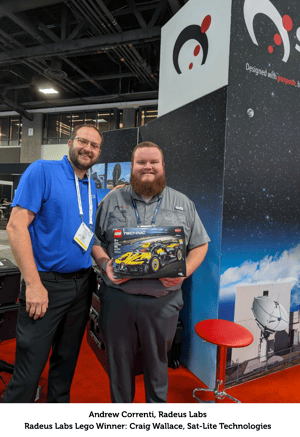
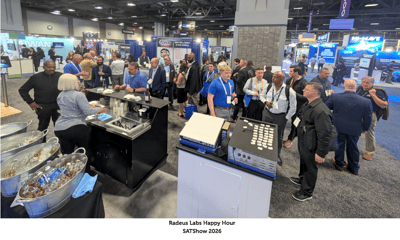
Between our LEGO sports car raffle and our Tuesday evening Happy Hour, we saw strong foot traffic throughout the show. The open bar format proved to be a great way to spark real conversations, the kind that go beyond a quick handshake and actually get into the operational realities people are dealing with day to day. It was great for building rapport and getting the Radeus Labs name in front of new faces.
Chris Steph Takes the Stage
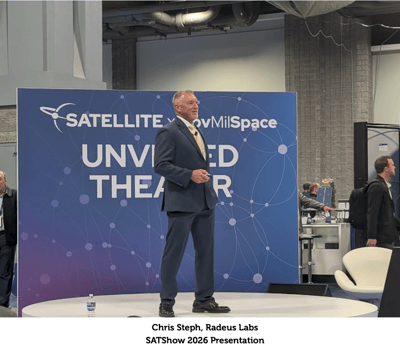 One of our highlights was Chris Steph's presentation at the Unveiled Theater: "The Modern Ground Station: Scalable Control Solutions for Legacy Parabolic Antennas."
Chris walked the audience through the full lifecycle of a legacy antenna retrofit, from the initial onsite survey and documentation gathering, through system configuration and installation, all the way to training and after-sales support.
A key theme of the talk was just how much variety exists across legacy antenna installations. Every manufacturer has done things differently, from polarization drive configurations and motor types to position transducers and limit switch setups, and any modern antenna control system has to be flexible enough to handle all of it.
Chris shared real-world examples of the surprises that can come up during retrofits, like undocumented clutches and unconventional cable jacketing, underscoring why thorough surveying and experienced integration partners are so critical.
For organizations running aging ground station infrastructure, the message was clear: modernization doesn't have to mean full replacement. Scalable, well-engineered control solutions can extend the service life of these assets significantly, but only when the retrofit process is approached with the right level of technical rigor and field experience.
For teams responsible for satellite antennas and controllers, that distinction matters. The work is not simply about swapping out equipment. It is about understanding the full operational context of the antenna, the site, the legacy hardware, and the long-term support needs behind the system.
Hands-On 8200 ACS Training
Andrew Correnti led two hands-on training sessions at the booth, giving engineers and technical evaluators a chance to get their hands on the Radeus Labs 8200 ACS platform. These small-group sessions covered installation processes, core system components, software capabilities, and tracking best practices, and the engagement from attendees was strong.
Industry Shakeups and Emerging Players
Beyond our own booth activity, what stood out most was the sense that the satellite industry is in the middle of a real shakeup. Some companies are scaling down while others are rapidly growing, and the exhibition floor reflected that shift. That said, it also made for some excellent networking. It was great to connect with M+P International in person to discuss their testing and data acquisition systems and explore how we might work together in the future. We also noticed a strong presence from companies like MDA Space and Rocket Lab, both making waves in the current aerospace landscape.
The LEO Race Heats Up
One of the most talked-about topics across the show floor was the growing competition in low Earth orbit satellite constellations. Amazon Leo, Amazon's rebranded satellite broadband initiative, formerly Project Kuiper, had a visible presence at the event and was a frequent topic of conversation. With over 200 satellites already in orbit and ambitious plans to reach commercial service across multiple countries in 2026, Amazon is clearly positioning itself as a serious challenger to SpaceX's Starlink.
Meanwhile, on the European side, the IRIS² (Infrastructure for Resilience, Interconnectivity and Security by Satellite) program continues to take shape, with a planned multi-orbit constellation of roughly 290 satellites aimed at delivering secure governmental and commercial connectivity by the end of the decade. The proliferation of LEO constellations, spurred largely by Starlink's success, is reshaping the ground segment landscape in ways that directly affect the kind of work we do at Radeus Labs.
Networking Beyond the Show Floor
Our team also made time for events outside the main exhibition, with some of the team attending a networking social hosted by Payload Space, a publication covering business and policy in the space sector, which was a great opportunity to connect with people outside the usual conference circuit.
Looking Ahead
SATShow Week 2026 reinforced what we've been seeing across the industry: the ground segment is changing fast, legacy infrastructure needs smarter modernization paths, and the companies that can bridge the gap between heritage systems and next-generation requirements are the ones that will matter most. We're proud to be in that conversation.
Thank you to everyone who stopped by our booth, attended Chris' presentation, or joined us for training and Happy Hour. If we connected at the show and you'd like to continue the conversation, don't hesitate to reach out.
See you next year, D.C.!