

CMMC, AI, and Engineering Data Control Cybersecurity rarely enters engineering organizations as a standalone initiative. It emerges as systems become more compute-heavy, more interconnected, and more dependent on sensitive data. In regulated computing environments, that shift has been underway for years.
As software-defined systems, virtualization, and advanced compute platforms move closer to the core of operations, cybersecurity stops being something applied at the edges. It begins to influence how systems are designed, deployed, and supported across their full lifecycle. In that context, cybersecurity becomes an architectural discipline.
From NIST Foundations to CMMC Discipline
For many organizations, the foundation of that discipline began with NIST 800-171. It established a baseline expectation that controlled technical data must be protected consistently and accountably. That meant understanding where data lives, who can access it, and how it moves through computing environments.
CMMC builds on that foundation and formalizes the expectation that these controls are implemented deliberately and sustained over time.
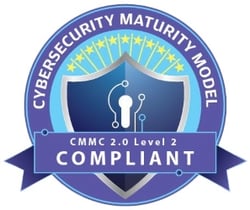 Radeus Labs meets the requirements of CMMC 2.0 Level 2. This reflects process maturity. The emphasis is building systems and workflows that enforce data protection by design.
These frameworks exist because data does not suddenly become valuable once it is classified. Long before that point, engineering data already represents intellectual property, system behavior, and years of accumulated expertise.
As Radeus Labs’ Facility Security Officer Dan Roessner has noted when discussing engineering data security, many teams do not pause to ask a basic question when using external tools and platforms: “What people don’t always stop to ask is, ‘What am I putting into this, and what’s the tradeoff?’ That question matters long before anything is classified.”
Why Controlled Technical Data Matters Early
Design documentation, configuration files, firmware logic, and system models move constantly through engineering environments. Without discipline, that movement becomes difficult to track and nearly impossible to contain.
Once proprietary data escapes its intended boundaries, the impact is not limited to a single project. It affects competitiveness, long-term supportability, and whether an organization can continue to operate with confidence. From an engineering perspective, that is not a compliance issue. It is a survivability issue.
Cybersecurity as a System Dependency
Engineers already think in terms of dependencies. Performance assumes stable components. Reliability assumes predictable behavior. Long-term support assumes known constraints. Cybersecurity belongs in that same category.
When cybersecurity is treated as part of system architecture, the benefits are tangible. Data flows are easier to understand. Dependencies are clearer. Systems behave more predictably over time. Engineering teams spend less time reacting to unexpected issues and more time improving performance.
When cybersecurity is treated as an afterthought, the opposite occurs. Systems may function initially, but confidence erodes as teams inherit risks they cannot easily see or control.
Where AI Changes the Equation
The growing use of AI in engineering and operational workflows adds pressure to these assumptions. AI tools do not simply process data. They absorb patterns, logic, and structure.
In security-sensitive environments, that matters. Once sensitive engineering data enters external or uncontrolled AI systems, control over that data becomes difficult to assess and nearly impossible to reclaim. Even when individual interactions seem harmless, repeated use can expose system behavior and design intent over time.
This does not make AI unsafe by default. It does mean that AI deployment decisions must be treated as architectural choices, not convenience upgrades. For teams evaluating compliance considerations in AI cloud adoption, that distinction is critical because tool choice affects where sensitive data travels, who can access it, and how long-term control is maintained.
For organizations operating in strict computing environments, the choice between cloud-based tools and on-prem computers is not philosophical. It is architectural.
Local compute and AI environments allow teams to keep sensitive data within infrastructure they can audit and control, apply access controls consistently across software, firmware, and AI workflows, and prevent unintended exposure of proprietary designs or operational logic. This is where conversations around CMMC AI tools open source local and on premise LLM strategies become practical rather than theoretical.
Once data is absorbed into external systems, the issue shifts from policy enforcement to long-term risk. That risk is difficult to unwind. Organizations that already treat cybersecurity as architecture are better positioned to evaluate AI responsibly.
Discipline That Extends Beyond Defense
Although NIST and CMMC originate in DoD requirements, the discipline they enforce applies broadly across mission-critical computing environments. The same practices that protect controlled technical data also improve system predictability, reliability, and long-term viability.
Defense-driven rigor often becomes a competitive advantage rather than a constraint.
Protecting data today is not about fear or restriction. It is about discipline. Understanding where data lives, how it moves, and who ultimately controls it is now part of responsible system design.
For teams operating in these computing environments, cybersecurity is not separate from engineering. It is part of it.
Rethinking Redundancy in Secure Compute Environments
When cybersecurity becomes part of system architecture, it changes more than how data is protected. It also changes how resilience is engineered.
Traditional approaches to uptime often relied on physical redundancy and stockpiled spare parts. Virtualization and software defined systems shift that model. When workloads are abstracted and infrastructure is intentionally designed, resilience can be built into the architecture rather than stored in inventory.
The same discipline that supports CMMC and NIST aligned data control also influences how teams approach hardware continuity. Redundancy becomes a design decision, not just a logistics one.
For a closer look at how virtualization reshapes spare parts strategy in secure environments, read Stop Warehousing Spare Parts: Rethinking Redundancy Under Virtualization.