

In hardware engineering, most conversations about product quality focus on the "outside" metrics: performance benchmarks, environmental ratings, and spec sheets.
Those things matter. But the most revealing moment in the life of a product happens when the marketing ends and the enclosure is opened.
The Moment That Defines a Brand
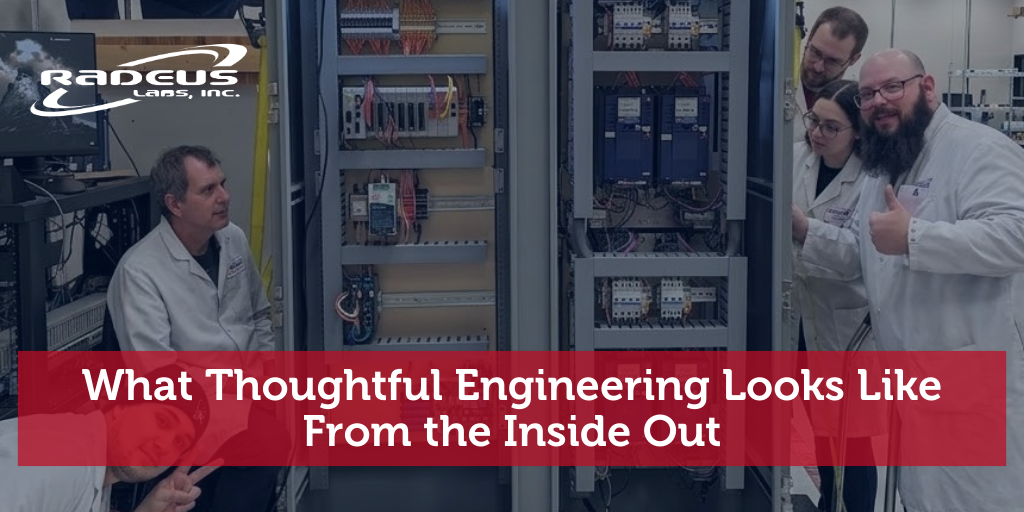
Recently, one of our customers had an occasion to open one of our units for a field inspection. Their reaction was immediate. They didn't just comment that the layout made sense; they noted that the internal design was far superior to the competitors’ products they had been using.
This wasn't a surface-level compliment. It came from a professional who has seen the inside of enough systems to know the difference between "standard" assembly and "thoughtful" engineering.
For an engineering team, that's the ultimate validation. But it also highlights a critical industry reality: The inside of the box is where the truth about a company’s discipline is revealed.
What Your Find When You Open Most Systems
If you've worked on technical hardware long enough, you've seen it. You open a system for what should be a routine service call and the cabling is blocking the components you need to reach. The thermal management looks like it was an afterthought. A straightforward repair turns into a full-day project because nobody thought about what happens after the unit ships.
These aren't unusual cases. This is standard across much of the industry; design choices made for the convenience of the production floor, not for the reality of what happens in the field. Everything looks fine during a demo. The problems show up later, when a technician actually has to get inside the system and do real work under real conditions.
That gap between how a product presents on the outside and what you find on the inside tells you a lot about the team that built it. At Radeus Labs, we think that's exactly where engineering integrity is proven.
Building a "Trust Buffer" Through Rigor
One of the most significant insights from our recent customer interaction was the timing. The unit was being inspected after a challenge in the field. Usually, that is a moment of high tension.
However, because the customer saw the level of rigor inside the unit, their tone remained positive. They saw a "thoughtfully designed" architecture that signaled professional competence.
When a customer opens a unit and sees that the engineering inside is as solid as what's on the spec sheet, it changes how they think about you. If something goes wrong down the line (and in complex hardware, things do go wrong) they're looking at it as an isolated issue, not a sign that the whole product is built cheaply. They stay on board because they've seen the work underneath. They know the team behind it is thinking long-term, not just trying to get through the sale.
For teams evaluating a computer design partner, this kind of rigor matters. The right partner is not only building to the initial requirement. They are thinking about access, serviceability, thermal behavior, future upgrades, and what the system will be like to support years after deployment.
Designing for the Person with the Screwdriver
Thoughtful internal design almost always comes from engineers who have lived on the other side of the problem. They've been the ones troubleshooting in the field and maintaining equipment under real-world conditions. That experience changes how you think about every decision inside the enclosure.
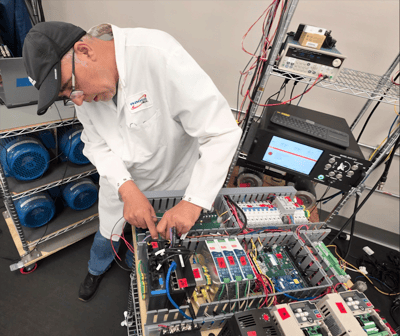 It means routing cables so that signal paths stay accessible and a troubleshooting call that should take thirty minutes doesn't turn into a half-day project. It means grouping related components logically so a technician can diagnose an issue without disassembling half the system to reach the part that matters.
It means engineering airflow paths with intention, not just adding fans, but protecting the most sensitive silicon from hotspots over thousands of hours of operation. And it means leaving real physical space between subsystems so that future upgrades are actually possible, not just a line in a marketing brochure.
None of this is accidental. At Radeus Labs, these choices reflect a deliberate investment in building hardware that works as well for the person holding the screwdriver as it does for the person signing the purchase order.
What You'll Find Inside
Customers in specialized hardware environments tend to look closely at what's under the surface, especially when they're working with a newer team. That makes sense, it's a high-stakes decision.
That scrutiny is even more important in mission-critical computing, where internal design choices can affect service time, reliability, thermal performance, and long-term maintainability.
We think that's a good thing. Our systems are built to be opened, inspected, and worked on, because that's what happens to hardware over the course of a real deployment.
For organizations evaluating advanced computing solutions, what is inside the enclosure should matter as much as the published performance numbers. The internal design tells you whether a system was built only to pass a benchmark or built to be supported in the field.
If you're planning a computing, SATCOM, or specialized hardware project and want to talk through design considerations, our engineers are always happy to have that conversation.