

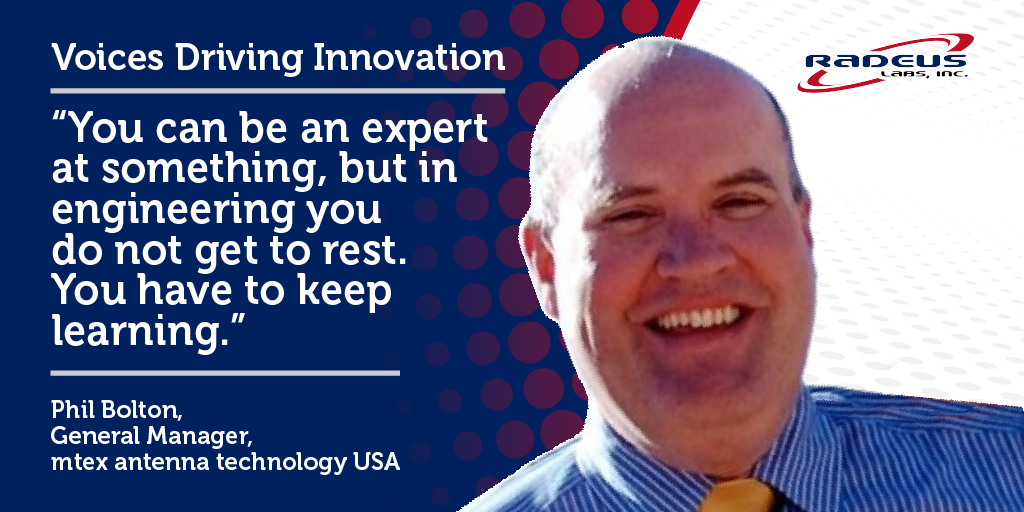
Phil Bolton, General Manager of mtex antenna technology USA, has been solving complex puzzles since he was a kid. At 14, he found a way to turn curiosity into a job, offering to work for a local furniture company for free if they would let him use their TRS 80 Model 4 computer after hours. Phil was looking for a chance to figure out how systems worked.
That instinct never left.
After studying engineering at LeTourneau University in Texas, Phil moved into aerospace electronics work in the early 2000s, then landed at VertexRSI, later TriPoint Global, in the control systems division. He wanted to travel and was hired as a field engineer. The reality was less glamorous at first. The work was demanding, the expectations were high, and the culture was blunt. Phil noted at the time, “You're sent out on your own and told don't come back until it’s fixed.”
Phil did not respond by backing away. He responded by connecting with someone who would teach him.
Wayne Black, whose name Radeus readers will recognize, was not Phil’s direct supervisor. He was simply the first person Phil worked alongside and the first person who helped the job make sense. When the answer to “teach me” was “we don’t have time,” Wayne became the exception. Phil asked question after question. Wayne answered them. Phil kept learning, and kept volunteering for the harder assignments, even when the official path forward was unclear.
Thinking Beyond the Control System
Over time, Phil’s relationship to the work widened. He started in control systems, but quickly became interested in the full stack, and then the full context. “A control system is a system. It’s a whole bunch of motors and parts and encoders and all different parts that make an antenna move and do a specific thing.”
That word, system, matters. Phil’s strength has never been limited to the box that carries the label “controls.” He wants to know why the antenna exists, what it is trying to accomplish, what it is connected to, and what the operator is experiencing when the whole chain breaks down. Many failures look like a control system problem until you zoom out.
“Maybe the solution isn’t the control system at all. It’s how the antenna works with its network.”
That is where the “complex puzzles” framing comes from. It's a practical description of the real work, and a hint at the mindset Phil tries to build in the people around him.
ALMA and the Discipline of Awareness
At ALMA, that mindset became non optional.
 Phil spent two and a half years in Chile supporting the Atacama Large Millimeter Array, one of the most ambitious radio astronomy projects ever built. The work was technically intense, physically demanding, and filled with situations where the next step was not written down anywhere.
“ALMA was bleeding edge technology. Everything was hard. Nothing was easy.”
Even the environment added friction. The daily work happened at high altitude, with antennas installed higher still. Oxygen became a tool, not a contingency. “Every time you go to work on the antenna, you have to have oxygen.”
But Phil does not tell the ALMA story as a test of endurance. He tells it like a story about teams, curiosity, and what happens when brilliant people are willing to share what they know. When he had time between tasks, he could walk the site and learn from specialists in completely different disciplines. If he asked how a system worked, people answered.
The work also made Phil refine how he talks about troubleshooting. In his view, troubleshooting is not a bag of tricks. It is a discipline built on awareness.
“Troubleshooting is really about awareness.”
He means awareness of physics, awareness of what is really happening, and awareness of your own mental state and motivations while you are trying to solve it. That last part is what separates the person who methodically finds the root cause from the person who chases symptoms until the clock runs out.
Phil shared with us the Awareness Stack he uses for troubleshooting:
Awareness of mental state
Awareness of the system physics
Awareness of your assumptions
Awareness of data needed for good decision making
Awareness of decisions being made
Awareness of team capabilities
Awareness of personal motivation
Consulting, Context, and Radeus Labs
Phil’s career took another turn after Chile. When ALMA wrapped, he assumed re entry into the next role would be simple. It was not. VertexRSI was operating within General Dynamics at the time, and internal shifts and changing plans left him suddenly back home without a landing pad.
He took a brief pause at home, when one day the phone rang. It was Wayne again, pulling him into a new effort with unfamiliar requirements, including a control system that would automatically level a trailer using hydraulics. It was outside Phil’s normal toolkit, which made it interesting.
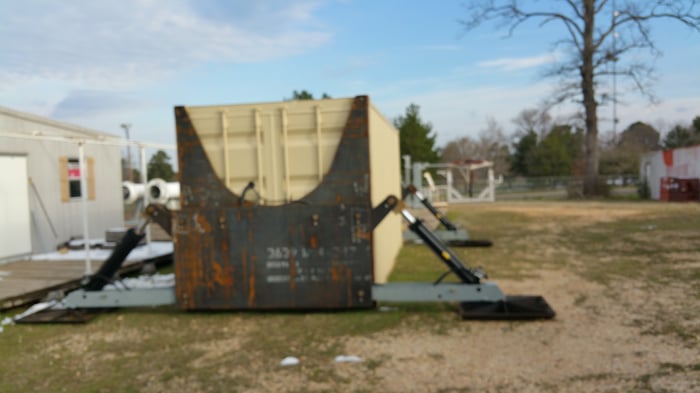
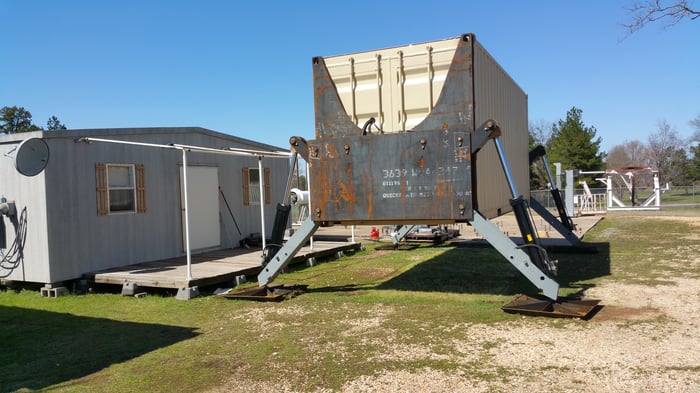
The project moved forward. Then it got canceled, the way government programs sometimes do.
“They just walked in and turned off the switch.”
By then, Phil was already working as a consultant. He learned the upside quickly: being a consultant led to constant variety, global travel, new systems, new teams, new constraints. He also learned the tradeoff that comes with being the person called in to fix something without being empowered to steer long-term decisions. “Unfortunately, you never get to make your own decisions as a consultant.”
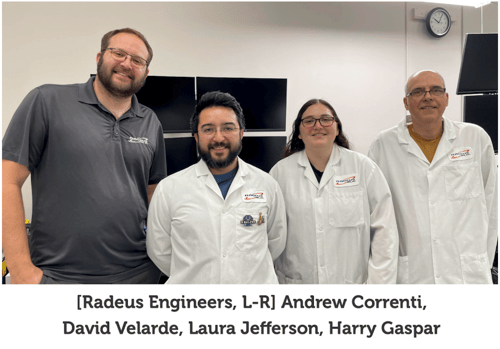 That consulting work is also how Phil came to work closely with Radeus Labs. Radeus Senior Architect Andrew Correnti described Phil as the person he calls when history matters. “He’s the guy I call when I don’t know what something is,” Andrew said. “He’ll say, ‘Oh yeah, I remember using that system once,’ and explain how it actually behaved in the field.”
Because Phil has worked with so many control systems, he has seen how priorities across SATCOM manufacturers have shifted over time. Many systems, he noted, have simplified tracking to basic pointing models that assume ideal conditions, an approach that works until antennas age or reality intervenes.
He described Radeus as a clear point of difference. Rather than abstracting away complexity, the team has stayed focused on how antennas actually behave in the field, including legacy systems, varied orbit types, and non-ideal conditions. “A lot of systems will tell you where to point and hope for the best,” Phil said. “Radeus is still focused on closing the loop on the signal and making it work under real conditions.”
A Generalist by Choice
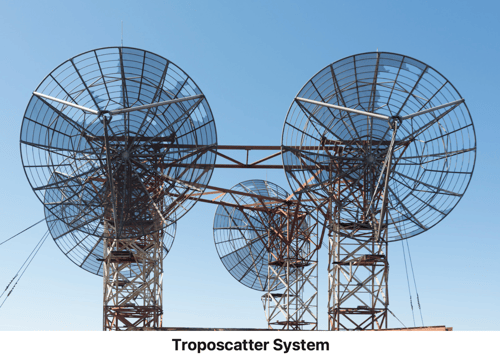 That same willingness to engage with complexity is why Phil has always worked as a generalist. Rather than specializing narrowly, he has moved between technologies and problem domains as the work demanded it. Troposcatter communications is one example. Phil describes it as a technology from an earlier era that became viable again once computing power caught up to the original theory.
It is “satellite communications without a satellite,” provided you are willing to throw enough power at the atmosphere. He learned it fast, built tools, trained others, installed early systems, and watched the program succeed, then get absorbed by competition and fade out. The pattern was familiar: build something hard, make it work, watch the world reorganize.
Leading mtex antenna technology USA
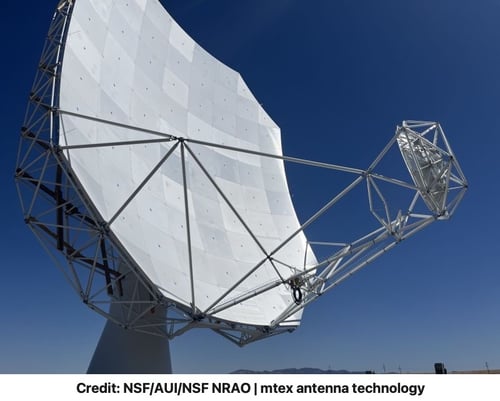 Today, Phil is the General Manager of mtex antenna technology USA, the U.S. arm of the German-based mtex antenna technology organization. While the companies are distinct, they work on the same projects, with the U.S. team focused on installation, on-site execution, and select design and systems support for complex antenna programs.
Phil’s connection to mtex goes back years, to his time working alongside engineers from MT Mechatronics during the ALMA project in Chile. After ALMA, those professional relationships continued through consulting work on projects in multiple countries. When mtex expanded its presence in the United States, Phil was asked to step in and lead that effort.
In practice, his role spans far more than a traditional management title. He helps bridge design intent and field reality, supports control system integration, advises on legacy and modern antenna systems, and works directly with teams responsible for installing and commissioning antennas that are expected to operate accurately for decades.
The work suits him. It rewards systems thinking, historical context, and the ability to connect disciplines that are often siloed. It also puts him in a position to mentor the next generation of engineers and technicians, something he views as both necessary and urgent.
“There’s a real problem of finding enough people to do the work,” Phil said. “And I really hope mtex-USA is going to be able to train another generation.”
Why Learning Should Never Stop
That focus on learning shows up in how Phil talks about the pace of change. He remembers a time when he could credibly claim to know nearly everything about personal computers. Then the web arrived and rewrote the rules overnight. “I blinked, and they invented the Wide Web, and it all changed overnight.”
His conclusion is simple: in engineering, you cannot stop learning. He encourages people to set aside time every week to learn something new, even if they are not sure it will be relevant yet, because relevance has a way of showing up later.
He is also optimistic about what new tools can do, especially when it comes to training. In his mind, AI will help people catch up faster and reduce barriers, but it will not replace the need for curiosity, discipline, and repetition.
📡
About Voices Driving Innovation
Radeus Labs' ongoing interview series featuring the engineers, advisors, and industry leaders shaping the future of high-performance computing, SATCOM systems, and mission-critical technology.
 Over the past few weeks, the Radeus Labs team has been on the road connecting with customers, partners, and new industry contacts. Computing and Recording Specialist Clay Moore attended