

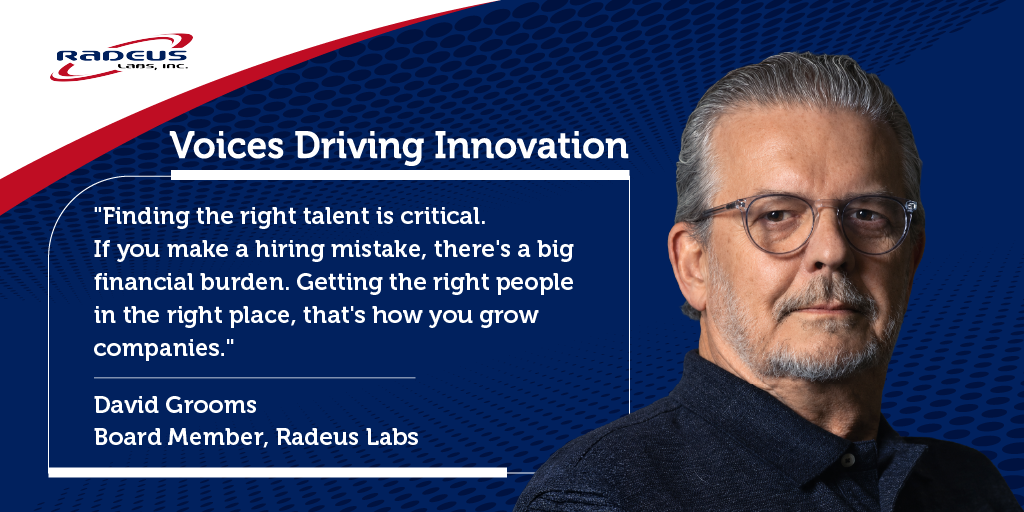
David Grooms was planning on being a history teacher. He studied history in college with every intention of becoming a teacher. Instead, through a series of relationships he hadn't gone looking for, he fell into business.
Today, David serves on the Board of Directors at Radeus Labs, one of several boards he is on. He brings four decades of experience building and leading companies across industries from microelectronics manufacturing to military-grade communications.
The School That Taught Him Everything
If a history degree got David into the room, Kyocera is where he actually learned to work.
The Japanese multinational took David in as a trainee, and for the next two decades, it gave him a master class in how to run a business. Finance. Product development. Sales. Marketing. Leadership. Nearly everything David knows about operating a company, he traces back to that experience.
"90% of my knowledge has come from Kyocera," he says without hesitation.
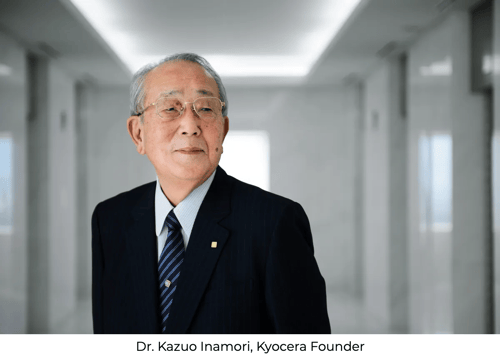 What made Kyocera distinctive wasn't its size. It was its founder, Dr. Kazuo Inamori, and the philosophy he built from the ground up. The philosophy was simple: people came first. Train them, support them, give them room to grow. That held even as the company reached $10 billion.
"Kyocera was really people first," David says. "Very focused on taking care of their people: not just their jobs, but their growth."
David rose to become Kyocera's first non-Japanese President, leading operations across the United States and Mexico. In Mexico, the people-first philosophy translated into action: medical benefits and training programs that workers there rarely had access to. The approach worked, not just culturally, but operationally.
"We took great care of the people," he says. "That was the driving focus: how to develop people and how to create talent."
The Book That Reinforced the Lesson
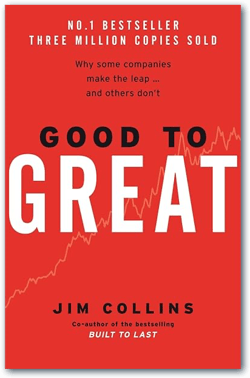 It was at Kyocera that David first crystallized what would become the organizing philosophy of his entire career. Jim Collins put it into words with Good to Great: get the right people in the right seats on the bus.
For David, that sentence isn't a business cliché. It's a working methodology.
"Any place I've been, I focus on finding the right people and giving them what they need to succeed."
That focus sharpened during his time as COO of Datron Systems and
President of the Advanced Technology Group, a maker of military-grade radio communications equipment. The US government provided Datron radios to multiple military partners in the Middle East for some of the most demanding environments on the planet.
When David arrived at Datron, the company was doing solid but modest revenue. When he left, that number had grown significantly.
"The real key was finding the right talent, making sure we had really good people working there."
Teaching What He Practiced
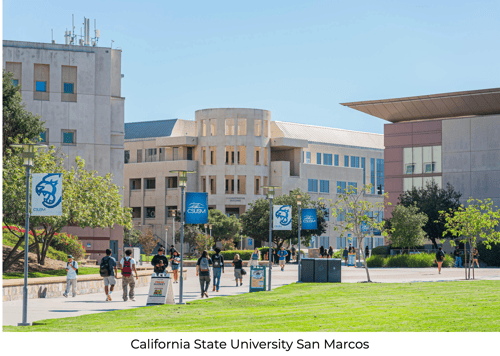 The same thread runs through his work as an educator. He served as a career advisor for the master's program at Cal State San Marcos, teaching students what he considers foundational and undervalued: professional development. How to find talent. How to build teams.
He's also watching how that search is evolving. David uses tools like ChatGPT and Gemini to sharpen the hiring process, starting with a clear picture of what a role actually requires, then letting the tool build out the profile.
"You define what a company needs, put that into one of the AI tools, and it creates the profile for you," he says. "It helps you identify the right person faster."
His caution is the same one he gives everyone: don't overcomplicate it. The goal is still getting the right person in the right seat. The tools just help you get there.
This is also how David found his way to Radeus Labs. Dr. Jim Hamerly, then Dean at Cal State San Marcos and already on the Radeus board, reached out and made an introduction. True to form, David had gotten the role through a relationship.
"Most of the jobs I've gotten, I got through referrals," he says."
What He Saw at Radeus
When David first looked at Radeus Labs, he saw a company with a clear foundation and real room to grow across both its SATCOM and computing businesses.
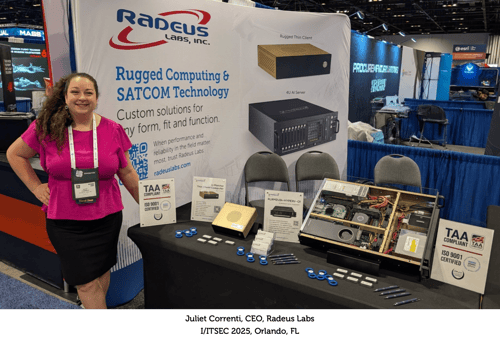 "I like Juliet," he says, referring to CEO Juliet Correnti. "I like what she's trying to do. Her focus is on the culture of the company, and I like that a lot."
A company that takes care of its people isn't a nice-to-have. It's the whole foundation. He saw in Radeus the same intentionality he first encountered at Kyocera, now inside a much smaller, faster-moving company.
In computing, Radeus has built a strong and lasting partnership with General Atomics (GA), and David points to that relationship as proof of what the company does well. They understand their customer's pain points. They show up prepared. And that, he says, is what keeps a client coming back.
The Advice He Never Stops Giving
Ask David what he tells companies operating in high-stakes technical markets, and the answer comes quickly. It's about alignment: not just between people, but between what an organization builds and what the market actually needs.
The term he uses is MRD: Market Requirement Document. Before a new product enters development, someone has to document what the market actually wants, not what engineers find interesting, not what's technically elegant, but what solves a real problem for a real customer.
"Make sure your employees understand the product they're selling, understand the market they're selling to," he says. "If you don't get that right, you'll struggle."
Engineering-driven companies can drift toward building for internal satisfaction rather than external need. The most technically advanced product in the world doesn't sell if the market doesn't require it.
At Radeus, David sees a team that has genuinely internalized this lesson. When he talks to the engineers, they echo back the same principles: listen to the customer, understand the pain points, let the market pull the product forward.
"GA loves them because they understand GA's pain points," he says. "That's the whole point."
Still in It for the Win
At the core of it all is something simple. David started as a salesperson at Kyocera. At heart, he says, that's still what he is.
"I like the victory. And victory is making sure the customer is delighted with the product and services we're providing."
He's not done yet.
"If I can help a company achieve that, I feel pretty good about it."
That's the whole thing, really. Not the titles or the turnarounds or the decades of boardrooms. Just a salesperson who wants the customer to be happy, still showing up to make sure that happens.
About Voices Driving Innovation
Radeus Labs' ongoing interview series featuring the engineers, advisors, and industry leaders shaping the future of high-performance computing, SATCOM systems, and mission-critical technology.