


A satellite move comes through, and the new one runs a different polarization than the last. In a lot of teleports, that still means what it's always meant: someone drives out, gets up on the antenna deck or the feed boom, throws the switch by hand, and drives back, hoping nothing else needs attention before the next pass. If the site is unattended, it means someone books a flight instead.
That workflow has stuck around less because it's inefficient and more because the obvious fix, remote polarization control, has usually meant replacing the feed or the switch hardware to get it. The Radeus Labs RL250 was built to remove that trade-off. It brings remotely commanded, feedback-verified CP/LP selection to the switch hardware already sitting on the feed, so a polarization change becomes a command from the NOC instead of a truck roll, and the NOC knows the switch actually moved instead of guessing.
What the RL250 Does
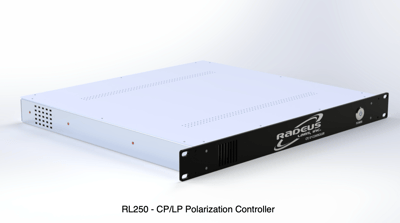 The RL250 independently drives two polarization switch motors, selecting circular polarization (CP) or linear polarization (LP) for each channel on command.
Integrated into the site's antenna-control and monitoring environment over TCP/IP Ethernet, it uses CP and LP switch indicator contacts to report the current switch state to the control system, giving operators positive state feedback rather than relying only on the command issued.
What it delivers:
- Independent CP/LP selection on two channels (POL 1 and POL 2) for dual-feed, or Tx/Rx-split
- Positive switch-state feedback through CP and LP indicator contacts, so the control system can display the current reported selection
- Compatibility with standard and latching (Circuit #2) polarization-switch motor circuits, supporting retrofit deployments without replacing the feed hardware
- 1RU rack-mount packaging, 80–260 VAC, 50/60 Hz input, two RJ45 M&C connections, and a rear-panel 24 VDC auxiliary output
For compatible existing installations: no feed replacement, no new switch hardware, just a remotely commanded polarization change instead of a site visit.
Where the RL250 Earns Its Keep
Here are several SATCOM environments where remote, feedback-verified polarization control delivers the greatest operational value.
Teleports and Gateway Earth Stations Repointing Between Satellites
Move an antenna from a satellite using linear polarization (common in C- and Ku-band FSS) to one using circular polarization, and the feed's polarization switch has to be thrown. Without remote control, that's a technician driving to the site, sometimes an antenna-access task in its own right. With the RL250, it's a command from the NOC: repolarize the feed remotely from the operations center, without a truck roll or field dispatch.
Unattended, Lights-Out Earth Stations
Arctic sites. Desert sites. Offshore platforms and diversity sites running with nobody on the ground. At unattended sites, a command acknowledgement alone isn't enough: the NOC needs confirmation that the switch reached the commanded state. The RL250 accepts CP and LP switch-indicator feedback for each channel and reports the current switch state to the control environment, giving the NOC a confirmed operating state before proceeding with the next step in the workflow. When the nearest human is hours away, that distinction matters.
Government and Military SATCOM Terminals
Deployed terminals routinely shift between military circularly-polarized payloads and leased commercial linearly-polarized capacity as missions and bandwidth availability change. With two independent channels in a single box, one RL250 can support both feeds of a dual-feed or Tx/Rx-split terminal. It addresses feed-polarization control within the broader terminal reconfiguration workflow as operators move between circularly polarized military services and linearly polarized commercial capacity.
Occasional-Use, Broadcast, and SNG Operations
Ad-hoc space segment bookings land on whatever satellite has capacity, and polarization varies by satellite and transponder. For crews using coordinated lineup procedures, RL250 polarization selection can be incorporated alongside antenna pointing and other pre-transmission checks, one less manual task standing between the crew and air.
Multi-Mission TT&C, LEOP, and Ground-Station-as-a-Service
Stations supporting many spacecraft a day (GSaaS networks, LEOP support, academic and NASA-affiliated ground stations) need per-pass reconfiguration on a schedule, not a staffing plan. Where the site's ACU and M&C platform support scheduled command sequences, the RL250 can add polarization configuration to the per-pass workflow.
System Integrators and Antenna OEMs
Building a new terminal or modernizing a legacy one, integrators get a drop-in 1RU box that works with the standard and latching polarization switch motors already sitting on the feed. No feed replacement required. It's a way to bring IP control to antennas that have never had it, without touching the parts that already work.
Built to Fit What's Already There
A few things are true across every use case above:
- Safety and cost. No avoidable feed-level service visit. No unnecessary antenna-access task in bad weather just to change polarization. That's a genuinely good outcome for field crews and for the budget line that covers site dispatches.
- One box, two feeds. Two independent channels in a single rack unit means dual-feed antennas, Tx/Rx splits, or two antennas at one site can run off a single controller.
- Verified state, not assumed state. Incorrect polarization can create cross-polar interference and put an operator out of alignment with the applicable network, coordination, and operating requirements. Positive state feedback helps the M&C system present the reported switch state before transmission is enabled: display of the truth, not an assumption.
- Fits existing infrastructure. The 80–260 VAC, 50/60 Hz input and compatibility with standard and latching polarization-switch motor circuits help the RL250 fit into existing site infrastructure rather than requiring a redesign.
Talk to our Specialists
The best way to know if the RL250 fits your site is to talk it through with someone who's dealt with polarization switching in the field. Reach out to Oliver Burns, SATCOM Specialist at Radeus Labs to walk through your specific feed, switch circuit, and remote control needs.


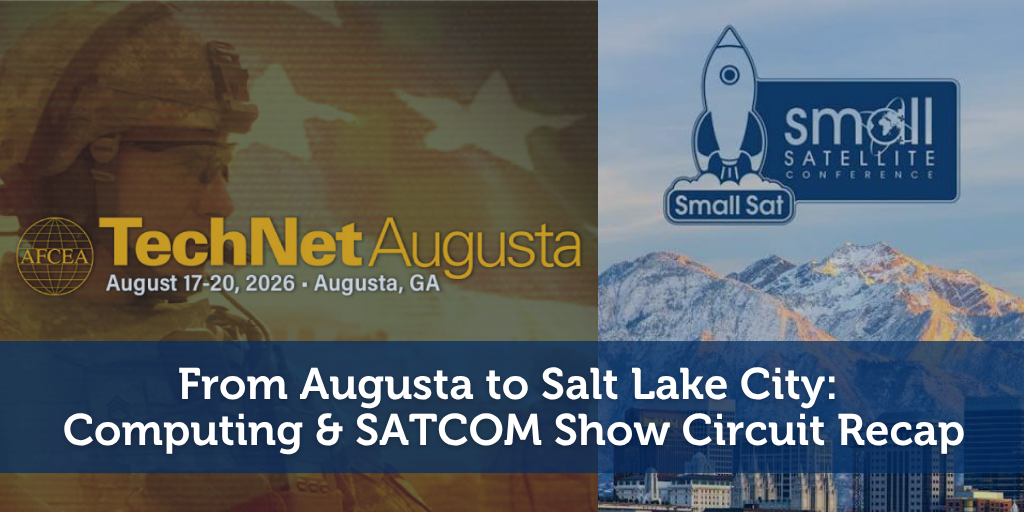
 Over the past few weeks, the Radeus Labs team has been on the road connecting with customers, partners, and new industry contacts. Computing and Recording Specialist Clay Moore attended