

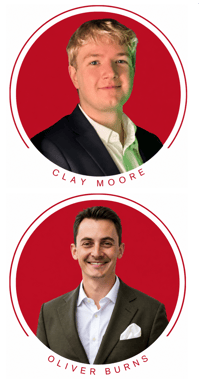
Radeus Labs Technical Sales Rep Clay Moore made his first trip to SOF Week 2026, held late last month in Tampa, Florida. The event was a new one for Radeus Labs, and one that came highly recommended. At Modern Day Marine earlier this year, SOF Week kept coming up in conversations as the place to be in the special ops and defense technology community.
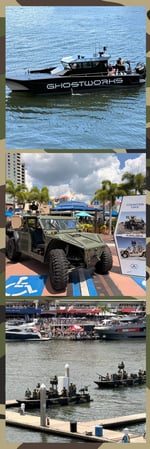
More Campus Than Convention Hall
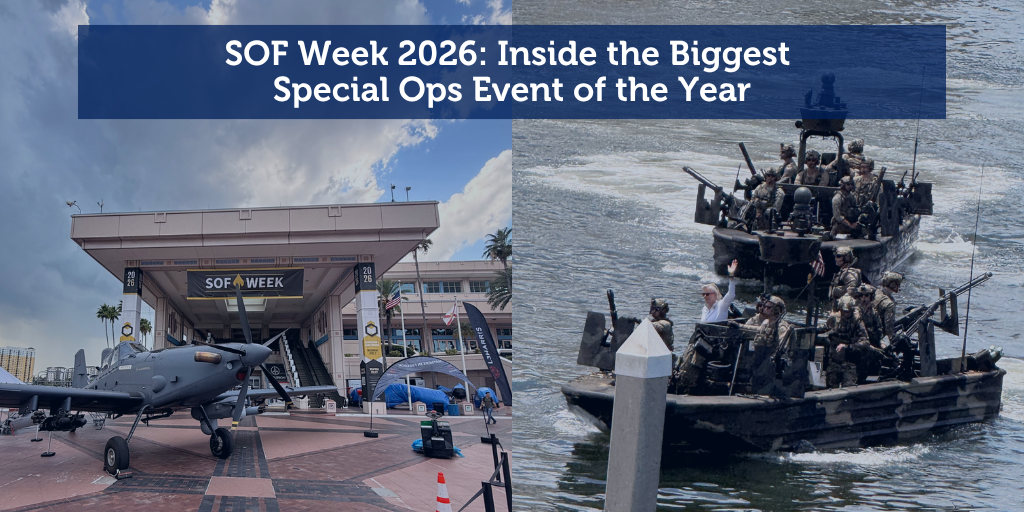
SOF Week doesn't have the typical single-venue conference vibe. The event spreads across multiple locations throughout Tampa: indoor exhibit halls at the convention center, outdoor exhibit areas and courtyards, and additional venues that together give the whole thing the feel of a campus.
It's a large, high-energy event that draws cross-community participation from across the special operations and defense technology community, and it felt like one of the year's biggest gatherings.
Part of what makes SOF Week distinct from other defense shows we have attended is the emphasis on specificity.
Where some conferences focus on broad program goals and large-scale platform development, SOF Week centers on narrow, mission-driven requirements. Exhibitors and attendees alike are thinking about how a given product, capability, or service supports a very targeted operational need. Conversations centered less on what a system could do in general and more on whether it solved a specific operational problem.
Three Themes That Defined the Show
A few threads ran through nearly every conversation Clay had on the floor:
- Autonomy and unmanned systems were everywhere. This is not a new trend, but SOF Week made it especially visible. Unmanned platforms and autonomous capabilities are increasingly central to special operations requirements, and the rugged computing hardware supporting those systems has to meet a very high bar.
- ISR (Intelligence, Surveillance, and Reconnaissance) was a consistent point of emphasis across exhibitors and attendees. ISR applications demand mission-critical computing that's fast, reliable, and deployable at the edge, exactly what Radeus Labs build for.
- Acquisition agility rounded out the conversation. There's a growing sense across the defense industry, and felt especially strongly in the special operations community, that development and procurement cycles need to move faster. Threats evolve quickly, and the hardware and software responding to them needs to be able to keep pace. The push for more nimble acquisition pathways and faster time-to-field was a recurring theme.
All three themes pointed back to tactical edge compute. The rugged, mission-ready backend infrastructure that makes autonomy, ISR, and rapid fielding possible was a clear presence at the show, and a relevant one for the mission at Radeus.
The Demonstration
The highlight of SOF Week 2026, at least for those lucky enough to attend this year, was the live Special Forces demonstration. This event only takes place every other year when SOF Week is hosted, which made the timing particularly meaningful. The demonstration played out over the water, with Blackhawks, boats, and special forces teams carrying out a simulated rescue mission. The scale and coordination on display were something to see.
Conversations Worth Having
Clay had productive conversations with teams across the show floor and at partner events throughout the week.
Particularly notable were discussions with GDIT (General Dynamics Information Technology) around edge compute and the role it plays in the programs they're working on. Clay was also able to reconnect with Carahsoft, a technology solutions provider known for supporting Federal, State, Education, Healthcare, and Private Sector industries.
Looking Ahead
SOF Week 2026 was a first for Radeus Labs, and it won't be the last. The intersection of special operations, autonomy, ISR, and tactical edge compute is a space that's only going to grow, and being in that room matters for our team.
If you're working through compute or infrastructure challenges for defense or mission-critical applications, Clay Moore and the Radeus Labs team are glad to have that conversation. Reach out to discuss what projects you are working on.
 Over the past few weeks, the Radeus Labs team has been on the road connecting with customers, partners, and new industry contacts. Computing and Recording Specialist Clay Moore attended