

When people talk about the satellite industry, the conversation almost always drifts skyward, to the rockets, the launches, the dazzling engineering of objects hurtling into orbit. SpaceX gets the headlines. Starlink gets the commentary. The names most people recognize belong to the space segment.
Randall Barney has spent 20 years making sure the other half of the story is not overlooked.
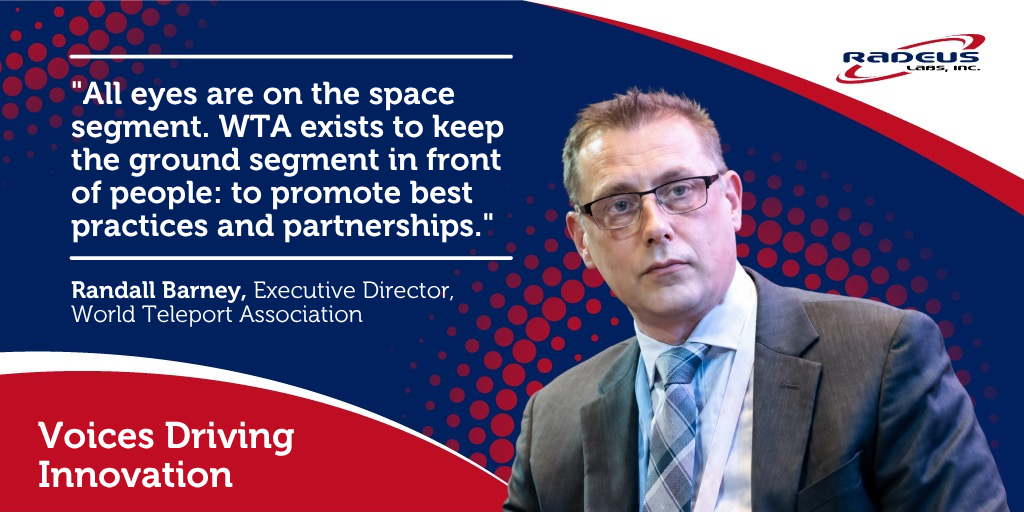
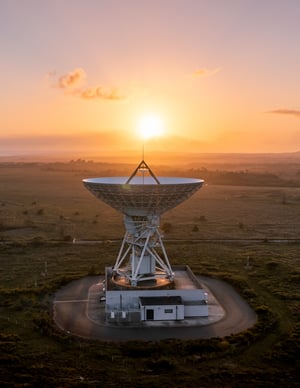 As Executive Director of the World Teleport Association (WTA), Randall’s work focuses on highlighting the satellite ground segment: the vast, unglamorous, mission-critical infrastructure that makes every satellite signal usable once it reaches Earth. Randall puts it simply:
"All the news is about the rockets, the satellites, SpaceX, but there's a huge amount of infrastructure that has to be in place on the ground to make everything work. That's what WTA is here to highlight."
It is a perspective that has kept him anchored to both the industry and the role for two decades. And it began, like many careers in niche industries, somewhat unexpectedly.
A Winding Path to a Niche Industry
Randall’s path into satellite communications was anything but linear. Before entering the world of trade associations, he worked across a range of jobs, eventually landing in nonprofit work with AAA in Seattle and later with the American Institute of Certified Public Accountants in New York.
When AICPA relocated its headquarters, Randall chose to stay. A colleague referred him to a consulting firm that helps manage associations, including WTA. He joined in a membership and administrative role and worked his way up to Executive Director.
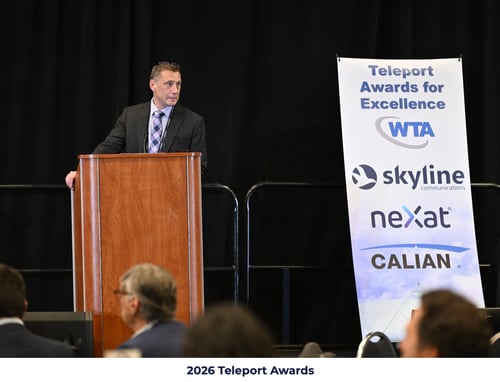 What has kept Randall there is a mix of industry interest and human connection. Randall shares:
"Going to different conferences around the world, meeting people from different cultures, seeing different places, that's a huge benefit. That's probably one of the big things that's kept me here."
That emphasis on in-person relationships explains why face-to-face meetings at events like Satellite DC, IBC Amsterdam, and CABSAT Dubai still matter, and why Radeus Labs makes a point of attending as many of them as possible each year.
Get the SATCOM Tools — No Installs, No Accounts →
The Independent Teleport Operator: A Hub the Industry Relies On
The role of the teleport has remained steady even as the industry evolves. What has changed is the type of traffic moving through these networks. Broadcast has declined, while data-driven services have expanded across sectors like maritime, aviation, energy, and remote connectivity.
At the center of this ecosystem is the independent teleport operator.
These operators provide the infrastructure that satellite companies rely on to deliver services in regions where building new ground stations is not practical. Rather than duplicating infrastructure in every market, satellite operators can partner with teleports that already have the necessary systems in place. Randall explains:
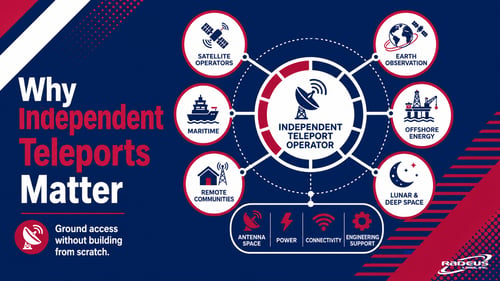 "An independent teleport operator is a local satellite ground segment service provider, but they also act as a hub that sells services to a satellite operator who wants to land data in a particular country without building their own infrastructure.
They already have redundant power, redundant connectivity, highly trained staff on site and a relationship with local regulatory agencies. It's simply economical for anyone putting up a space mission to use an independent operator."
This model increasingly resembles a form of specialized real estate. Operators lease antenna space, power, and engineering support to customers who need reliable access points into terrestrial networks.
A Certification That Does the Legwork
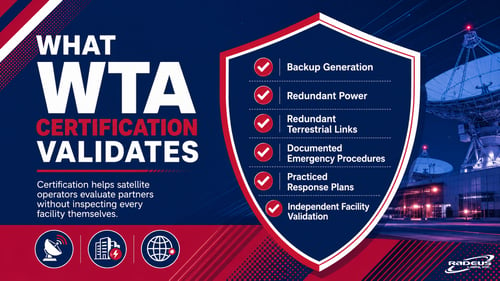 One of WTA's most tangible contributions is its certification program, launched in 2012 to address a practical challenge.
When satellite operators look to partner internationally, verifying the quality of a remote facility can be difficult and costly. Sending engineers across the world to inspect infrastructure is not always feasible.
WTA’s certification program was designed to solve that problem. According to Randall:
"The certifications program was designed to do a lot of the legwork in validating independent operators, so a satellite operator didn't have to send someone out to inspect infrastructure before making them a partner."
Modeled after ISO and data center standards, the program evaluates redundancy across power, connectivity, and operational procedures. It also ensures that contingency plans are not just documented but regularly tested.
It serves another purpose as well. In a competitive bidding environment, lower cost does not always mean higher reliability. Certification provides a clear, auditable signal of quality in a market where differences are not always visible upfront.
The Starlink Effect and What Comes Next
No discussion of the satellite industry today is complete without addressing the impact of low Earth orbit (LEO) constellations like Starlink. Lower latency and aggressive pricing have reshaped expectations across several use cases. In areas like crew communications, where real-time interaction matters, these advantages are significant.
At the same time, independent teleport operators continue to offer clear advantages, particularly in regions where terrestrial infrastructure isn’t already established and difficult to build out.
New areas of growth are also emerging. Teleports are increasingly supporting lunar and deep space communications, as well as expanding roles in Earth observation. Facilities like Goonhilly in the UK have already contributed to lunar missions, signaling a broader shift in capability.
Optical communications is another area to watch. Using light instead of radio frequencies offers relief from spectrum congestion, though it introduces new constraints, such as sensitivity to weather conditions.
The industry is not being replaced so much as reshaped. WTA’s role is to help its members navigate and adapt to that shift.
Cybersecurity and AI
A Cybersecurity Reckoning
If there is one issue gaining urgency across the ground segment, it is cybersecurity. Recent breaches in satellite networks have highlighted vulnerabilities, and regulatory pressure is increasing. In response, WTA is developing a cybersecurity assessment program tailored specifically to teleport operators.
Randall describes the initiative as a way to help operators understand where they stand before new requirements take hold:
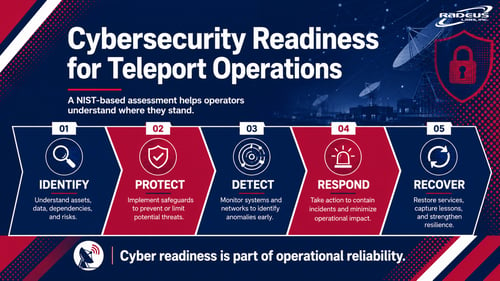 "We're assessing where operators are at, where they need to improve to meet the cybersecurity requirements that are coming. It's based on the NIST framework, and we expect to launch very soon."
Unlike the certification program, this initiative is designed as an assessment rather than a formal credential, giving operators a clearer view of their readiness before mandates arrive.
Report on AI in the Teleport
Randall also informed us that WTA is preparing a research report on the use of AI in teleport operations, expected later this summer. He says early findings suggest AI is being used to identify potential issues before they escalate, helping operators shift from reactive to proactive maintenance.
That kind of research is part of the broader information WTA provides its members through reports, webinars, and industry analysis, and it reflects what Randall and WTA do best: looking after the people who keep the ground segment moving and helping them stay informed, connected, and ready for what comes next.
📡
About Voices Driving Innovation
Radeus Labs' ongoing interview series featuring the engineers, advisors, and industry leaders shaping the future of high-performance computing, SATCOM systems, and mission-critical technology.
For engineers who want faster answers and fewer manual steps, our new toolkit is worth a look: