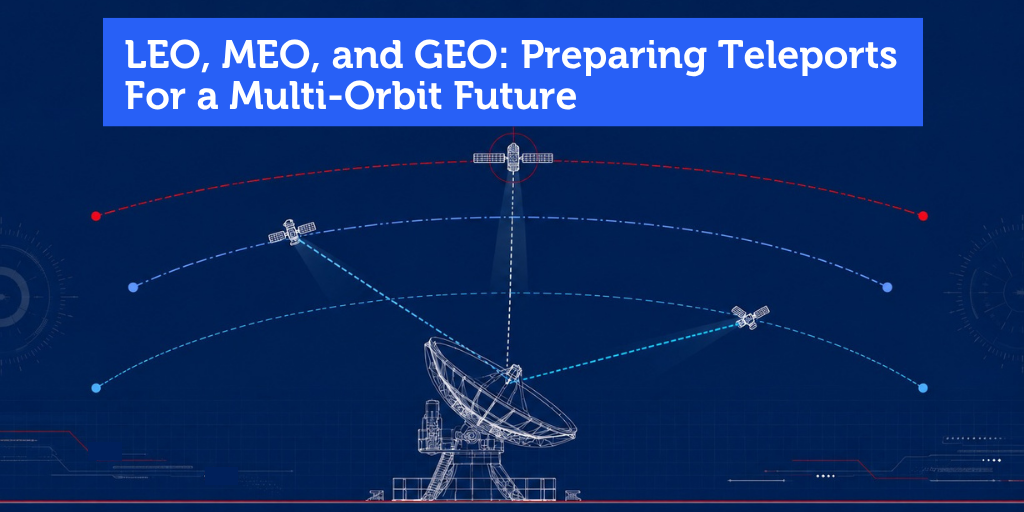
For decades, much of satellite ground infrastructure was built around a predictable model: point an antenna toward a geostationary satellite and keep it there.
Today, some teleports, particularly defense, gateway, test, and other high-performance sites, are being designed or upgraded to support more than one orbital regime. The continued expansion of low Earth orbit (LEO) networks alongside medium Earth orbit (MEO) and geostationary orbit (GEO) services is creating new demands on the ground systems supporting them.
Recent industry activity also highlights the continuing strategic value of LEO communications networks. Rocket Lab and Iridium, for example, have announced a proposed acquisition, subject to shareholder, regulatory, and other customary approvals. The deal would combine Rocket Lab's launch and spacecraft capabilities with Iridium's global LEO communications network.
The development does not mean every teleport needs to support every orbit. It does underscore an important question for ground operators: How adaptable is today's infrastructure if tomorrow's mission requires a different orbital regime?




 Over the past few weeks, the Radeus Labs team has been on the road connecting with customers, partners, and new industry contacts. Computing and Recording Specialist Clay Moore attended