

The Interservice/Industry Training, Simulation and Education Conference (I/ITSEC) has earned its reputation as the world's largest modeling, simulation, and training event, and for good reason. Each December, thousands of defense, aerospace, and training professionals converge on Orlando to explore cutting-edge technologies, participate in groundbreaking discussions, and forge partnerships that shape the future of military readiness and education with computing systems built for demanding environments.
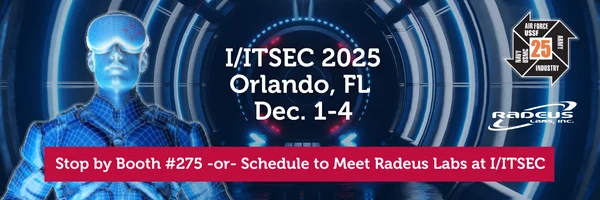
This year, Radeus Labs is proud to be part of that conversation. We'll be at Booth #275 throughout the conference (December 2-6), and we're bringing something new with us!
Why I/ITSEC Matters
I/ITSEC isn't just another trade show. It's where innovation meets application. The 2025 agenda showcases exactly why this event draws such diverse and accomplished attendees, from advanced warfighter training technologies to artificial intelligence integration in simulation environments and AI powered platforms. The conference tackles the real-world challenges facing modern defense and training operations.
What makes I/ITSEC essential:
- Technical paper sessions covering virtual reality training effectiveness, data analytics in mission readiness, and emerging simulation methodologies
- Live demonstrations of flight simulation systems, cyber training platforms, augmented reality applications, and advanced computing infrastructure including AI servers and high density, low power servers.
- Panel discussions uniting military leadership, industry innovators, and academic researchers to address critical questions about training effectiveness and technology adoption
- Networking opportunities with professionals facing similar technical challenges across defense, aerospace, and training sectors
For organizations working in simulation, data acquisition, or specialized computing environments, I/ITSEC provides unmatched opportunities to see what's possible, learn from peers facing similar challenges, and discover solutions that can transform operations.
For teams evaluating advanced computing solutions, that practical focus matters. The most valuable infrastructure conversations are not only about processing power. They are about whether systems can support real workloads, specialized cards, integration constraints, and long-term field use.
Introducing Our New High Density, 16-Slot Server
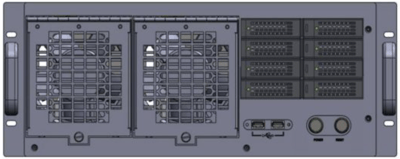 This year at I/ITSEC, we are unveiling our High Density 16-Slot Server: a purpose-built solution that addresses a persistent infrastructure challenge in simulation, virtualization, and multi-card computing environments.
This powerful server is a response to a problem we kept hearing: organizations running complex simulations, data acquisition systems, or FPGA acceleration need numerous PCIe slots for capture cards, specialized communication interfaces, and custom hardware in custom computing systems.
Standard motherboards typically offer only 4-7 slots, forcing customers into difficult choices. They must either split systems across multiple servers, or invest in massive GPU chassis that require multiple power circuits, generate excessive heat, and can weigh over 150 pounds.
Andrew Correnti, Lead Engineer at Radeus Labs, explains:
"We saw customers struggling with a common problem: they had 12, 14, 16 different add-in cards, but they didn't need massive compute power. This isn't about brute force processing. It's about giving engineers the physical connectivity they need without forcing them into infrastructure they don't."
For organizations looking for a high density server, that distinction is critical. The requirement is not always maximum compute. Sometimes the real challenge is slot count, card access, power simplicity, thermal control, and the ability to consolidate infrastructure without overbuilding the system.
What the High Density 16-Slot Server delivers:
- 16 PCIe slots in a standard server form factor
- Single power cable operation (no special electrical infrastructure required)
- Manageable thermal output for easier cooling and deployment
- Barebones architecture, fully customizable for customer-specific add-in cards
- VM-ready platform for consolidating multiple physical servers into virtualized environments and demonstrating VMware with hardware pass-through
This is slot density without the infrastructure burden, purpose-built for organizations that need physical connectivity more than raw processing power.
Real-World Impact
The applications of our new server are compelling:
- Aerospace simulation environments running helicopter trainers with multiple specialized interface cards for aerospace and military applications
- Data acquisition systems recording from numerous sensors simultaneously
- FPGA acceleration for parallel processing tasks
- Industrial control systems managing devices with different communication protocols
One early adopter of our server consolidated three 4U servers into a single 4U unit, reducing rack space by two-thirds while cutting power and cooling requirements proportionally.
For field deployments, mobile operations, or space-constrained installations, that kind of consolidation changes what's possible.
The system excels in scenarios where traditional solutions fall short:
- Vehicles and trailers with limited power infrastructure
- Equipment rooms where every rack unit counts
- Sealed enclosures where heat management is critical
- Older facilities without modern electrical capacity
For teams evaluating high performance virtualization servers, this consolidation story is especially relevant. Virtualization can reduce hardware sprawl, but only when the underlying system supports the required add-in cards, passthrough needs, power limits, and deployment environment.
See It in Action
I/ITSEC provides the perfect venue for this launch. The conference attracts exactly the professionals who understand these challenges: simulation engineers, system integrators, training facility managers, and technical leaders working at the intersection of hardware and mission requirements.
Visit us at Booth #275 throughout the conference to:
- See the High Density 16-Slot Server in person
- Discuss your specific multi-card challenges with our engineering team
- Explore how consolidation could reduce your infrastructure footprint
Whether you're running simulation environments, building virtualized systems, or managing complex data acquisition platforms, we'd love to show you what's possible when slot density meets practical engineering.
Want to ensure dedicated time with our team? Schedule a meeting at the booth in advance. We'll make sure you get the focused discussion your project deserves.
We're looking forward to another tremendous I/ITSEC, and we'd be honored to have you stop by and explore how the right infrastructure can eliminate constraints and unlock new possibilities.
See you in Orlando.