

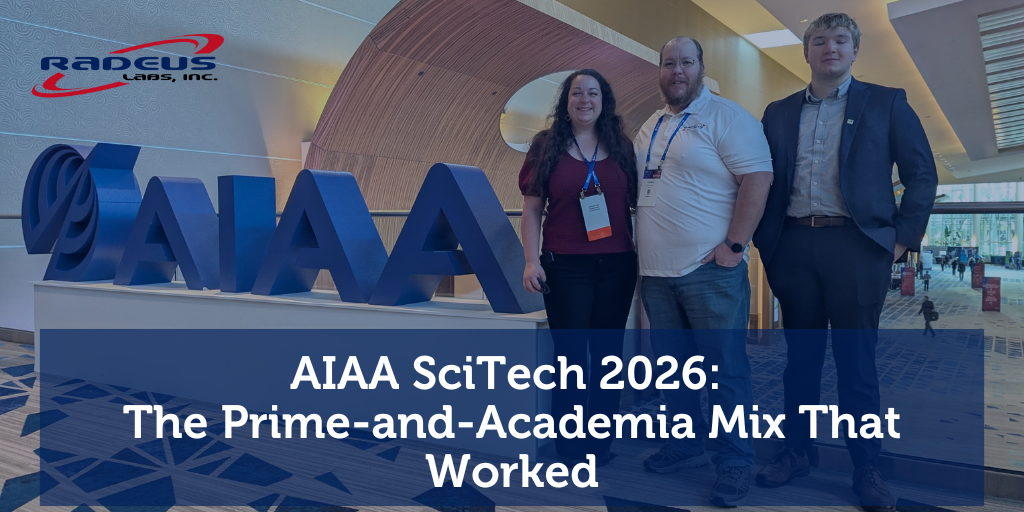
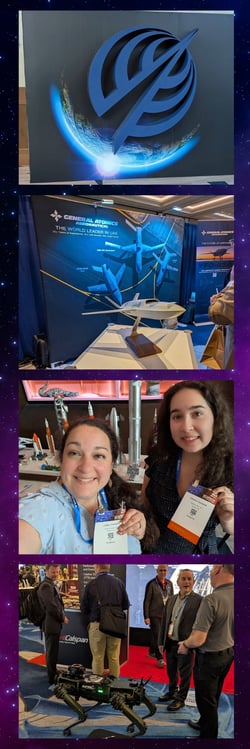
 AIAA SciTech 2026 created space for deeper technical conversations across academia and industry. With a compact exhibit hall (about 115 vendors) and a strong academic backbone, SciTech created the kind of environment where you actually get time with the right people.
For Radeus Labs, that meant fewer “wander the floor” moments and more targeted conversations around real programs, engineering problems, and what teams are prioritizing next in AI powered servers.
What Stood Out At SciTech This Year
Compared to other aerospace shows, this one leaned heavily into students, research, and technical papers, and surprisingly, space.
Across the conversations we had, a few themes kept resurfacing around high-density server needs:
- A lot of GNC (Guidance, Navigation, and Control) interest
- A noticeable concentration of propulsion engineers and space-focused research
- Technical discussions spanning Space Force, lunar and Mars mission planning, payload/fuel tradeoffs, and even the realities of Mars launch windows
-
A strong international presence (it didn’t feel like a “local” show)
Even with the academic weight, the primes showed up in force. We saw meaningful presence from Lockheed, Northrop, Boeing, and General Atomics, and the mix of “recruiting energy + program talk” was very real advanced computing solutions.
SciTech continues to stand out because it brings together a blend of major primes, academic labs, researchers, students, and aerospace engineers who are thinking deeply about where the industry is headed. For companies developing advanced computing solutions, that mix creates a valuable window into both near-term program needs and longer-term technical direction.
Anduril Industries and The CCA Spotlight
One of the most heavily attended sessions we saw at the event centered on the Collaborative Combat Aircraft (CCA) topic. It was standing-room and “wall-to-wall” in the room.
Anduril Industries had a strong presence at SciTech, and the topic of CCA clearly drew attention across the show floor. CCA to be an active and highly watched effort right now, and SciTech made it clear that teams are paying close attention to who's presenting and how momentum is evolving around the program. Both General Atomics and Anduril are the top two competitors for the CCA program, and the attention this effort is generating is driving motion and innovation across the industry.
An encouraging pattern we also noticed: hiring momentum. Both General Atomics and Anduril mentioned plans for significant hiring in 2026, and the other major primes, like Northrop, Boeing, Lockheed seemed to be in similar expansion mode. After some industry downsizing in recent periods, this represents a positive shift in the aerospace and defense sector.
Civil Space Shortfalls
Another thread that caught our attention was discussion of Civil Space Shortfalls, framed as a call for civilian organizations and industry to provide input on where capability gaps exist and what’s needed.
That kind of public “tell us what’s missing” signal matters. It suggests real problem-framing is happening in the open and that industry feedback may help shape priorities.
For teams supporting government technology solutions, those open capability-gap conversations are especially relevant because they point to where agencies, contractors, and technical partners may need better infrastructure, stronger integration support, and more resilient systems.
Conversations That Mattered Most
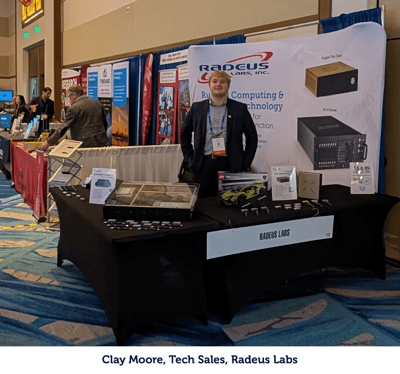 Because the show was smaller, it created a different kind of value: more time with exhibitors and program-adjacent conversations.
Some of the highlights:
- Reconnecting and building new touchpoints at General Atomics - It was great to strengthen existing relationships and make new connections with people at GA, reinforcing a partnership that continues to be important to our work.
- Good discussions with teams at major primes - We had productive conversations with engineers at Lockheed, Boeing, and Northrop. One particularly valuable discussion was with RTX who works on systems integration and has previous experience at Satcom, creating a strong potential tie-in for future collaboration.
- M4 Engineering - We reconnected with M4 Engineering, a company we've engaged with at previous conferences including AIAA Aviation Forum & Ascend. They were involved in interesting work around VTOL aircraft prototypes, and it was valuable to continue building that relationship.
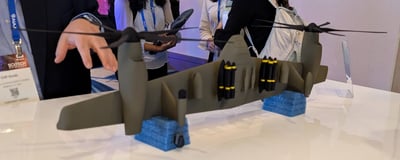 Lockheed's vertical takeoff UAV - We had an engaging conversation about Lockheed's new unmanned aircraft that competes in the Osprey category but uses a different approach where the rotors don't tilt down. The unmanned aspect is what makes the design particularly viable, removing constraints that would affect crewed aircraft.
-
Hardware-in-the-loop simulation everywhere - A renewed thread around hardware-in-the-loop (HIL) simulation came up across multiple booths and conversations. We even heard a variation phrased as "hardware on the loop" in one panel setting. Multiple companies were focused on this kind of testing, and we received outreach from a customer about a related project, signaling growing interest in this area.
A Moment of Respect: Robert Liebeck
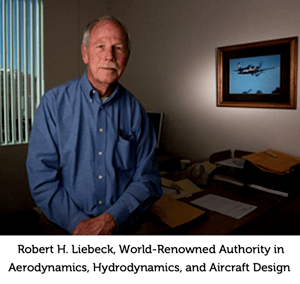 SciTech also included a brief tribute acknowledging that Robert Liebeck recently passed away. Liebeck was widely regarded as one of the most influential aerodynamicists of his generation, known for his pioneering airfoil designs and long-standing contributions to both industry and aerospace education.
It was a grounding reminder that behind all the programs and papers, this community is built by decades of contributions, and SciTech, in particular, is shaped by people who’ve invested their careers in advancing the field.
Radeus Labs at the Show
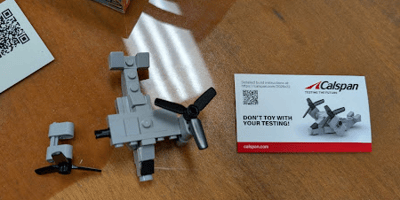
The compact exhibit hall made small details more noticeable. We were positioned along a main pathway near an entrance, which kept conversations steady throughout the event, and we were across from Calspan, whose custom mini Lego Osprey build stood out as one of the more memorable pieces of booth creativity on the floor.
Where we saw interest in Radeus: The 16-Slot Server
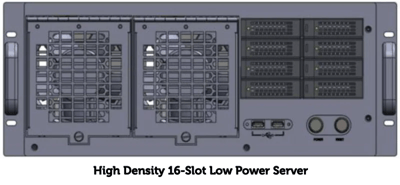 We also had multiple conversations sparked by our 16-slot server. Even without a unit physically on the floor, it was encouraging to hear the “how could this fit into our work?” questions showing up organically. That’s a strong signal for where compute needs (and form-factor constraints) are heading in aerospace and defense environments. A strong correlation between this unit and potential retrofits has come about.
A strong correlation between this unit and potential retrofits has come about. For teams evaluating a high density server, the interest at SciTech reflected a practical need: more compute capability, more card support, and better fit within space-, power-, and integration-constrained environments.
A Compliance Milestone: CMM2 Certification
One of the most important “business-reality” threads that came up: compliance readiness.
We’re CMM2 certified (CMMC Level 2) — and we heard clear signals that teams are actively looking for partners who can operate inside these requirements (or help them understand what “good” looks like). It’s a meaningful differentiator, and one we’ll be building on in our 2026 outreach.
Where the Conversation Continues
SciTech reinforced the value of focused, technical conversations around system longevity, modernization, and operational tradeoffs. Those same discussions are carrying forward beyond the show.
If you’ll be at SATELLITE 2026 in Washington, D.C. (March 23–25), the Radeus Labs team will be at Booth #2736. We’ll be continuing conversations around retrofit paths, drop-in replacement strategies, and how to update systems without unnecessary disruption. Meetings can also be scheduled during the event.