


 If your organization runs VMware, you've probably already had the conversation: We know we need to do something. We just don't know when, or how hard it's going to be.
I've been having that conversation too with our customers. We don't have every answer yet, but we've learned enough to say this: moving from VMware to Proxmox is probably more achievable than you think, and we're committed to mapping the path in the open.
At Radeus Labs, we build and support computing systems for teams that can't afford surprises: long program lifecycles, strict security requirements and little tolerance for downtime. Many of our customers aren't large enterprises with dedicated VMware account teams. They're smaller groups running focused deployments, and they've felt the recent licensing and pricing changes the hardest.
The question we hear most isn't whether to move. It's when, and where to.
The Clock Is Now Ticking On Horizon 7
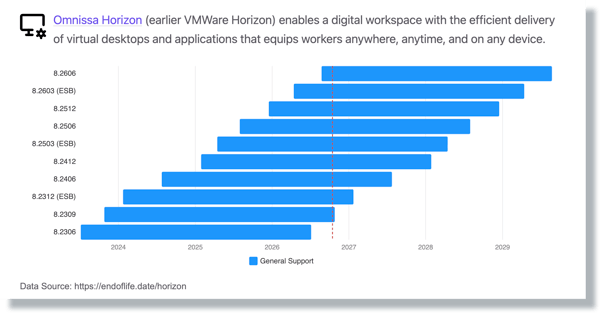 Many teams have kept Horizon 7 running because it works, and nobody changes a working platform lightly. But that window is closing. Horizon 7's general support officially ended in 2023, and some of the remaining Horizon 7 arrangements our customers rely on are expected to run out in early 2028. That leaves a bit more than a year to land somewhere new.
Most teams will assume Horizon 8 is the next step. Before you commit, consider two things:
- Upgrading is already a migration. Moving to Horizon 8 takes planning, testing and downtime. If you're spending that effort anyway, it's fair to ask whether it should go toward a platform you control.
- Horizon 8 has its own clock. Each release is supported for roughly three years, according to Omnissa's lifecycle matrix. Upgrading resets the timer; it doesn't stop it.
Horizon 8 isn't the wrong choice for everyone. It just shouldn't be the automatic one.
It May Not Be As Hard As You Think
Switching platforms after years on VMware can feel like a leap. But the move is less mysterious than it looks. Proxmox is built on Linux and long-established open-source technologies, and our own engineers already run it in production for several customers.
A few things surprise people when they look closely:
- Shared GPUs are officially supported. Virtual GPU (vGPU) technology lets several virtual machines share one graphics card, which matters more than ever at today's GPU prices. NVIDIA added Proxmox VE as a supported hypervisor starting with vGPU 18, and it appears in NVIDIA's current product support matrix. (Supported deployments require a paid Proxmox subscription and an NVIDIA vGPU license.)
- Storage and high availability have solid answers too. If you use vSAN, you can often repurpose your existing hardware with Ceph or ZFS, and existing SAN equipment can continue as shared storage, with some trade-offs. Proxmox includes high availability natively, and Proxmox Backup Server adds backup and recovery.
- Your VMware experience transfers. Virtual machines, templates, storage, networking and clusters rest on the same concepts. The menus differ, but a team that knows VMware already understands most of what it needs.
- You may use less than you think. Bundled VMware licenses often include features a team never uses, so the list of capabilities that truly need replacing is often shorter than expected.
Every environment still needs careful planning and testing, but this is well-traveled territory, not uncharted ground.
"But It's OpenSource"
This is one of the most common hesitations we hear about moving from VMware to Proxmox, and it deserves a real answer.
First, there is a company behind it. Proxmox VE is developed by Proxmox Server Solutions GmbH, an independent, for-profit company founded in Vienna, Austria, in 2005. It sells paid support subscriptions, and partners offer consulting and integration. You can have a phone number to call.
Second, open source is already everywhere you trust. Linux, which Proxmox is built on, runs much of the world's critical infrastructure, including government and defense systems. Because the code is public, security teams can inspect it, and problems get found and fixed by many people.
Finally, it protects you from the next surprise. If a proprietary vendor changes prices or terms, your options are limited. With open source, you can switch support providers, management tools or hardware, and you always keep the code your infrastructure runs on. It still takes work to run well, but that work builds knowledge inside your organization rather than dependence on a single vendor.
What We're Working On Next
We believe there's a path from VMware to Proxmox for almost everyone. The harder question is how to deploy it well where reliability and security can't be compromised. That's our focus over the coming weeks:
- Building it ourselves and writing the guide. We're setting up Proxmox on the same kind of hardware our customers use, including shared GPUs, and documenting every step: what works, what doesn't and what to watch for. Practical guidance for specialized setups like this is still thin, and we don't want to speak confidently about anything we haven't done.
- Tackling security hardening. Many of our customers must meet formal security requirements, often on networks disconnected from the internet. We haven't found a ready-made government security checklist for Proxmox, so we're working with our security specialists on a baseline built from established Linux standards.
We'll share what we learn here as we go, including the parts that turn out harder than expected.
Watch This Space, And Tell Us What You Need
This is the start of a conversation, and we'd like you to be part of it. If you're facing the same decision:
- Send us your questions. Tell us what's keeping you on VMware or what worries you about moving, including details about your environment: shared GPUs, vSAN or SAN storage, high-availability needs, disconnected networks, a single server with no spare. If others are likely asking too, we'll investigate and share what we find.
- Ask to hear when the roadmap is ready. We'll reach out once we've tested the process end to end and have a practical plan to share.
You don't need to have it all figured out. Sometimes the best first step is talking it through with someone working on the same problem. Feel free to schedule a call with our Computing Account Executive Clay Moore.
— Juliet Correnti is the CEO of Radeus Labs, a U.S.-based cleared facility and ISO 9001 certified manufacturer of satellite communication and computing systems for military, infrastructure, aerospace, government technology solutions, and public safety environments.
[For more background on life after VMware, check out the recap of our summer Lunch & Learn with Wendell Wilson from Level1Techs.]



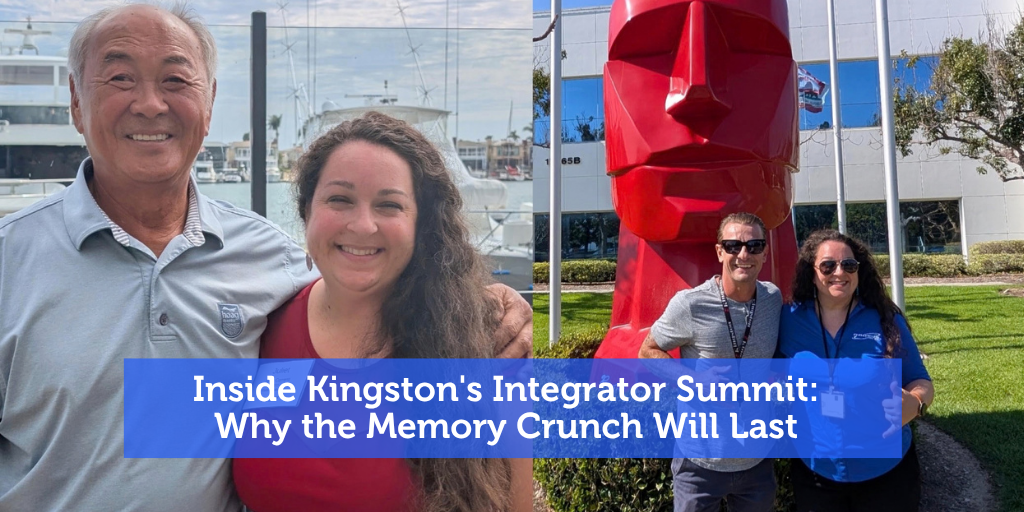
 This summer I spent two days at Kingston Technology’s Integrator Summit. It was a small group: about 15 companies, capped at 40 people. We heard their market outlook, walked through product roadmaps, met one-on-one with our Kingston account reps, and met David Sun, one of the founders.