

 In satcom, every satellite pass, flight test, and range operation produces a flood of data that teams must acquire, protect, and turn into insight. That challenge surfaced repeatedly at the International Telemetering Conference (ITC 2026) last month in Arizona, both in conversations at the Radeus Labs booth and throughout the conference program.
Across three days, our discussions ranged from telemetry and data acquisition to AI, cybersecurity, and compute. For satcom teams, these topics are increasingly central. As ground systems become more connected, capturing, processing, and safeguarding mission data matters as much as maintaining the link itself.
Quality Over Quantity
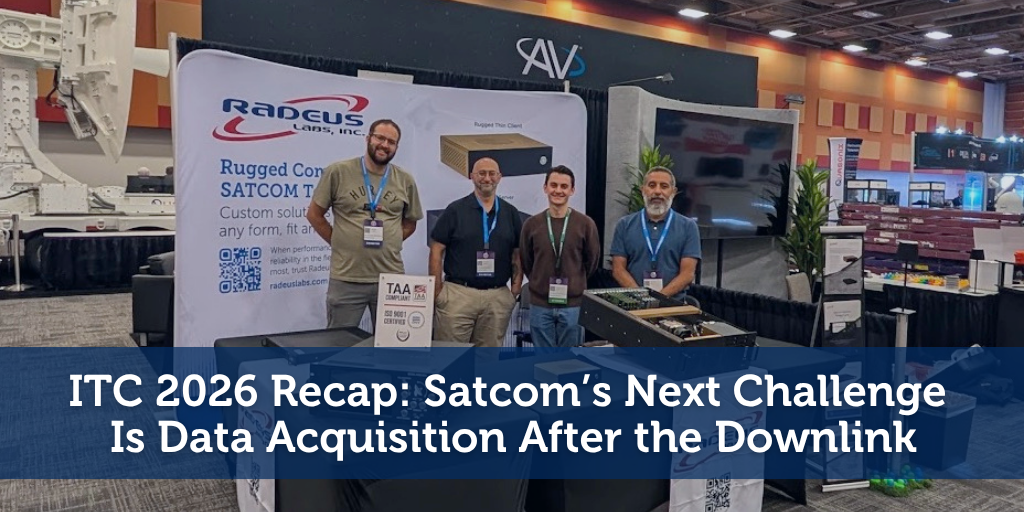
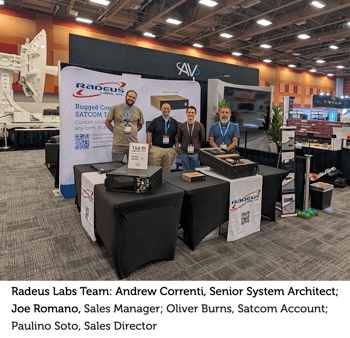
 ITC isn’t the largest show on the calendar, but it is one of the most focused. Most visitors were engineers who arrived knowing exactly what they needed.
“ITC 2026 was quality over quantity,” said our Sales Director Paulino Soto. “It was a very educated crowd. It wasn’t us educating the customer. The customer knew what they were looking for.”
Themes we heard most on the floor:
-
Speed and readiness: Teams want to acquire and act on data faster.
-
Networked telemetry: More sensors and capture systems are moving onto IP networks.
-
Direct access to manufacturers: Attendees valued the unusually high number of manufacturer representatives on hand, giving them a rare opportunity to get answers directly from the source.
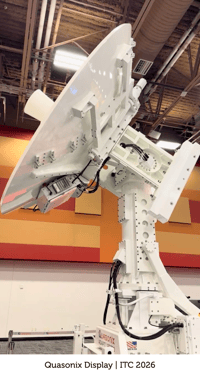
Clay Moore, our Computing Account Executive, saw clear overlap between the challenges telemetry teams described and the systems we already build. That overlap was hard to miss, literally. Right behind our booth stood a massive Quasonix dish, a reminder that every telemetry stream begins with an antenna on the ground. What happens to that data next is where computing and recording systems come in.
Satcom’s Data Acquisition Problem Is Now a Compute Problem
 AI came up in nearly every conversation, even among satcom attendees, and the driver was volume. Data from satellites and UAVs is outpacing teams’ ability to sort, file, and report on it.
“Even on the satcom side, AI was in everybody’s conversations,” Paulino said. “They were looking at compute as an add-on solution.”
If you run a ground station or gateway, you’re probably already feeling this. When satcom teams start treating on-site compute as a core part of system design, the computers behind the antenna become just as mission-critical as the antenna itself.
Zero Trust Meets the Legacy Ground Segment
In his luncheon keynote, The Zero Trust Imperative – Securing the Data Stream, Derrick Hinton of Scientific Research Corporation tackled a challenge familiar to anyone maintaining long-lived ground infrastructure: how to secure legacy hardware as telemetry becomes more IP-based and more sensors on test ranges are networked together.
A lot of the equipment on these ranges was never built to identify itself or support modern encryption. The keynote's answer was Zero Trust, where no device is trusted by default and each gets only the access it needs.
The talk was aimed at test ranges, but satcom teams will recognize the problem. Antenna control systems, modems, and recorders often stay in service for decades. As more of the ground segment connects, securing or replacing that equipment without breaking a validated configuration becomes a priority.
One Computer Instead of Many
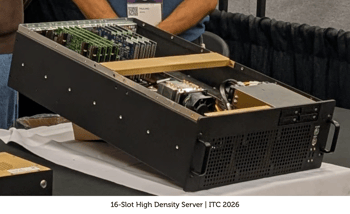 Security wasn’t the only hardware challenge on attendees’ minds. Space was another. Telemetry setups often need more input cards than one computer can hold, so teams end up running several machines side by side. That’s why our 16-slot system drew strong interest from teams working in data acquisition.
“Instead of having multiple computers, it can be one computer that can do everything,” said Andrew Correnti, our Senior Systems Architect. For satcom and range teams in tight racks, shelters, and vehicles, that means less space, less power, and fewer systems to maintain, without giving up the inputs their data acquisition chain depends on.
AI as a Tool for the Subject-Matter Expert
 Andrew’s presentation drew a full room. It was based on his paper, The Subject-Matter Expert as Developer: AI-Assisted Tooling for High-Volume Telemetry Data, which ITC is publishing in February 2027.
The paper looks at how an engineer with no formal software background used an AI coding assistant to build a browser tool for antenna control unit telemetry in a single weekend. That tool now logs roughly 60 parameters per second, tens of thousands of rows a day, and shares as a single link. It’s one of seven free, browser-based tools our engineers have built this way, now available as our SATCOM Engineering Tools for the Field for RF calculations, satellite tracking, IESS validation, and log analysis.
The session ran long, leaving no time for formal Q&A, but several attendees caught Andrew afterward. One, a fellow engineer from the defense community, had faced the same challenge and taken the same approach. “There’s a lot of talk about AI slop,” Andrew said. “But it can be very helpful in the right situations.”
Satcom engineers can catch a version of Andrew's talk at SatShow 2027 in Washington, D.C., this March.
Building the Next Generation of Telemetry and Satcom Talent
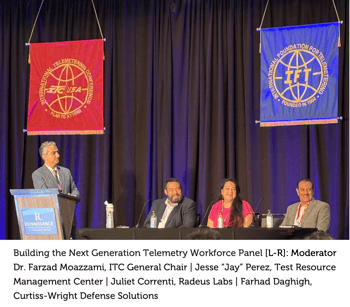 Our CEO, Juliet Correnti, joined the panel Building the Next Generation Telemetry Workforce, facilitated by ITC 2026 General Chair Dr. Farzad Mozami. Fellow panelists included:
- Jesse “Jay” Perez, Test Resource Management Center (TRMC) intern program
- Farhad Daghigh, VP of Sales & Business Development, Flight Test Instrumentation, Curtiss-Wright Defense Solutions
Juliet shared what Radeus Labs looks for in candidates, starting with authenticity. With so many resumes now written by AI, she encouraged students to bring who they really are.
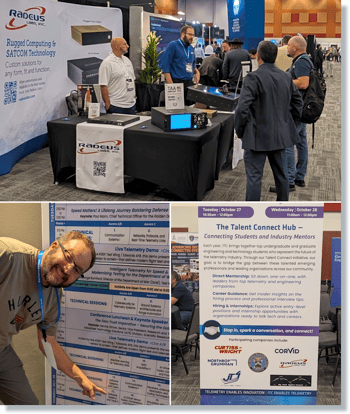
The team continued that conversation at the ITC Talent Connect Hub, sharing why a smaller company can be a strong career launchpad, where you don’t fall through the cracks and get hands-on exposure to every part of the business.
Telemetry in Action
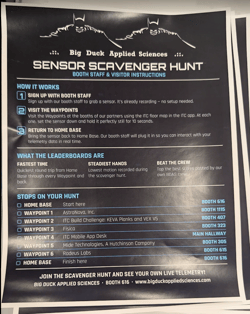 Our booth neighbors, Big Duck Applied Sciences, built a sensor scavenger hunt that put data acquisition on display. Participants carried a sensor to six checkpoints as it tracked light, speed, and location, then watched their data live.
“You actually saw telemetry in action,” Juliet said. It was a friendly competition and a clever reminder of what this community does every day.
Next Up: Meet Radeus Labs at I/ITSEC
Is your team buried in more data than your current setup can handle? Running ground hardware that’s overdue for a refresh? We’d love to hear about it. We build AI servers, antenna control systems, and data recorders for exactly these problems, and our U.S.-based engineers stick with you long after delivery.
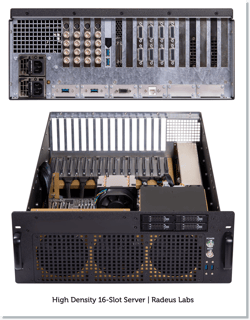 Catch our team at I/ITSEC, November 30–December 4, in Orlando, Florida where we will demo our High Density 16-Slot Server at Booth #2425. You can stop by and enter to win our Kingston external hard drive raffles, or schedule a meeting with our team.