

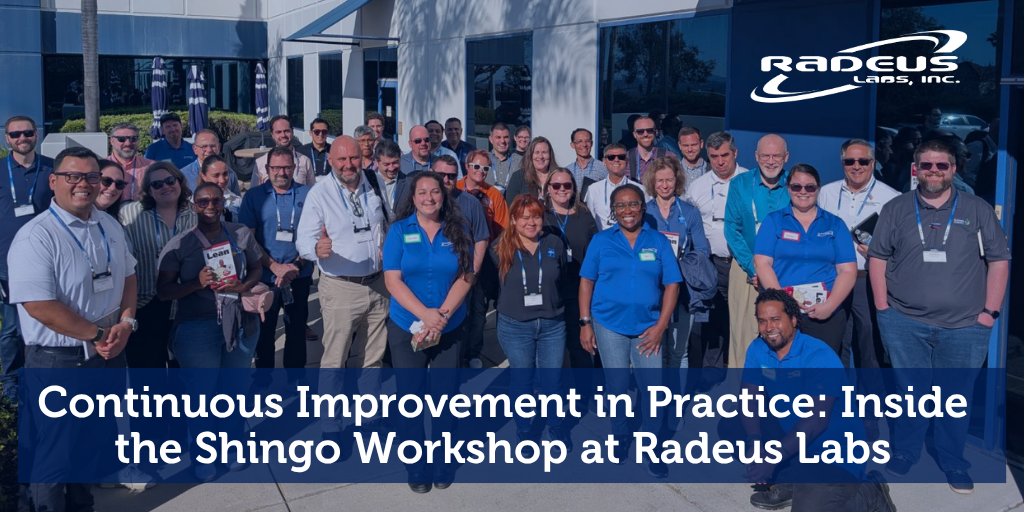
 Last week, Radeus Labs hosted a Shingo workshop that surfaced a core question: what does it take to improve not just processes, but the behaviors and systems behind them? Teams from across industries gathered at Radeus' facility to work through that question in a practical setting, examining how high-performing operations translate from theory to execution.
From Conference to Shop Floor
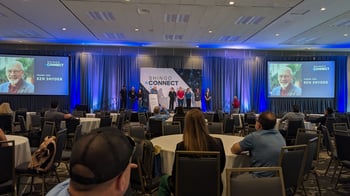
The activity at Radeus Labs was part of a broader set of events tied to the Shingo Institute's conference and gala in San Diego March 18.
At Shingo Connect, attendees came together with a shared focus on continuous improvement. This year’s theme, Accelerating Human-Centered Transformation, emphasized a central idea: lasting excellence comes from aligning systems and processes with people, culture, and core principles.
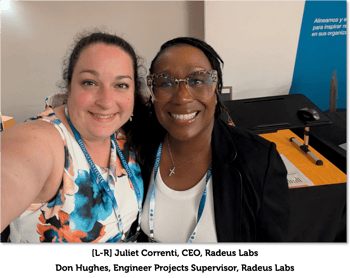 Radeus Labs played two roles. The team hosted a two-day workshop led by SA Partners, followed by a facility tour that brought concepts into a live production environment. At the same time, team members participated in the broader Shingo conference and gala.
Attendees represented manufacturing, utilities, disaster response, and nonprofit organizations, reinforcing that challenges around consistency, quality, and improvement are universal.
What Shingo Emphasizes
For many at Radeus Labs, this was a first deep exposure to the Shingo model. While rooted in Lean foundations, its emphasis differs. The focus is not just on tools or efficiency, but on the behaviors that produce results.
Several core principles guided the sessions:
- Respect every individual
- Lead with humility
- Focus on process
- Embrace scientific thinking
- Create value for the customer
- Improve flow and system-wide consistency
One idea stood out: ideal results require ideal behaviors. That shifts improvement efforts away from reacting to outcomes and toward designing systems that consistently produce them.
For organizations building advanced computing solutions, that distinction matters. Reliability is not created only at the final inspection point. It is shaped through the systems, decisions, workflows, and behaviors that guide every step of production.
From Classroom to the Floor
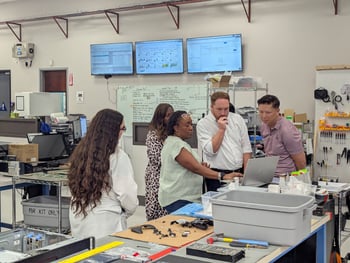
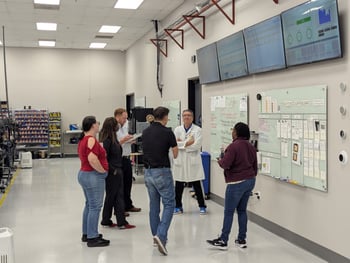 Radeus Labs hosted around 40 attendees for a guided facility tour. Participants moved through key departments in small groups, where leaders explained how workflows are structured, how Lean practices are applied, and how teams approach quality, flow, and accountability.
The format encouraged direct dialogue, allowing visitors to connect Shingo principles to real execution inside a working production environment.
Where Principles Became Practical
During the tour and workshop, several patterns became clear:
- Workflows accounted for upstream and downstream impact
- Quality was built in, not inspected later
- Teams were accountable for both process and outcomes
- Improvement discussions were grounded in data, not assumption
These moments reinforced how principles translate into daily decision-making.
For Radeus Labs, that connection between principle and practice is especially important because many customers operate in demanding environments where equipment failure, quality drift, or process inconsistency can create serious operational consequences.
A Leadership Perspective
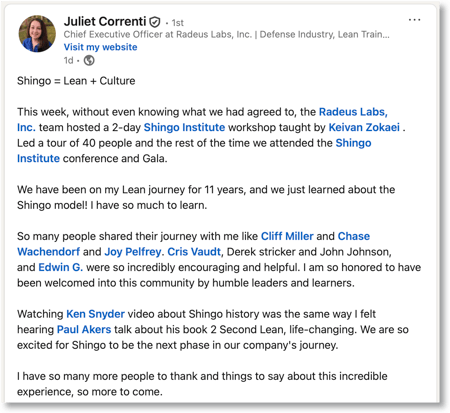 For CEO Juliet Correnti, the week marked a meaningful inflection point in the company's Lean journey.
In a recent LinkedIn post, she described how the opportunity to host the workshop quickly expanded into full participation in training, facility tours, and the conference. Despite more than a decade of Lean experience, she noted this was the team’s first immersive exposure to Shingo.
She also highlighted the importance of the broader community. Conversations with practitioners across industries reinforced that continuous improvement is shaped through shared experience. The historical grounding behind the model also stood out, drawing connections to earlier influences like Paul Akers.
The takeaway: Shingo builds on Radeus Labs’ direction, with a deeper focus on culture as the driver of sustained performance.
Culture as the System Behind the System
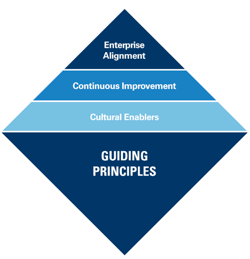
A central idea throughout the week was that culture is not abstract. It is the result of behaviors reinforced by systems.
The Shingo model structures this clearly. Guiding Principles shape thinking. Cultural Enablers define leadership behaviors. Continuous Improvement ensures progress is systematic. Enterprise Alignment connects strategy to execution.
Many organizations implement Lean tools. Fewer sustain them. Without cultural reinforcement, even well-designed systems regress. Operational excellence becomes less about isolated initiatives and more about how people work and make decisions every day.
That is especially relevant in modern high-performance environments, where engineering quality, production discipline, supply chain awareness, and long-term support all have to work together.
Why This Matters for Radeus Labs
 Hosting the workshop created a structured way to evaluate and extend existing practices. The value included:
- Pressure-testing processes against a global framework
- Establishing a shared language for improvement
- Learning from practitioners across industries
- Reinforcing the connection between engineering rigor and operational discipline
It also positioned Radeus Labs within a broader network focused on long-term performance rather than short-term optimization.
 Over the past few weeks, the Radeus Labs team has been on the road connecting with customers, partners, and new industry contacts. Computing and Recording Specialist Clay Moore attended