

After a year of AI dominated headlines, I/ITSEC 2025 brought the conversation back to infrastructure. This show was about systems, sustainability, and the real engineering work that keeps training and simulation programs running
And for Radeus Labs, this year felt different; busier, more technical, and packed with the right people in the right conversations.
Here’s what stood out.
A Show Floor That Never Slowed Down
The energy was immediate. Exceptional foot traffic, strong military presence, and substantive technical discussions started Monday and didn't let up through Thursday.
The recurring theme: Defense programs are energized, well-funded, and urgently searching for stable, long-life hardware that won't jeopardize their multi-year architectures.
Simulation Teams Need Hardware That Stops Changing Every 12 Months
One message kept resurfacing: constant hardware refresh cycles are killing simulator sustainment.
Teams shared the same frustrations:
- Form factors shift every 8–12 months
- Part numbers change
- Integrations break
- Fielded systems require redesign long before their mission does
Our conversations with vendors at the show who are tackling these challenges firsthand reinforced the need for non-proprietary components, stable roadmaps, and predictable lifecycle support.
This is where Radeus Labs continues to shine: hardware that stays available and consistent long enough to support real program timelines.
Virtualization Is Finally Moving From Conception to Execution
One of the strongest technical threads this year was the accelerating push toward virtualizing ground control stations, trainers, and simulation backend systems.
Programs are no longer just exploring virtualization; they’re actively architecting around it. But with that shift comes real confusion:
- Teams aren’t sure how redundancy works when it’s no longer tied to physical hardware
- Licensing models suddenly behave differently
- Many programs don’t have a clear picture of how to map workloads correctly
- Longstanding assumptions about one-to-one compute simply don’t apply anymore
We saw multiple organizations on parallel journeys, some in government, others in industry, all working to virtualize ground control stations and training systems. Companies like General Atomics and others are leading this shift, and several teams are actively implementing virtual GCS architectures and exploring architectural best practices for high-performance virtualization servers.
That convergence is a sign: Virtualization isn't a trend. It's a necessary evolution. And many teams need guidance to architect it correctly.
AI Conversations Were Different This Time
 AI wasn’t absent at I/ITSEC, but it wasn’t dominating the conversation either. Instead, we saw thoughtful, practical interest, especially from backend simulation developers:
- Teams collecting simulator data and feeding it into AI-driven reporting
- Early exploration of automated debrief intelligence
- Interest in secure, local AI hardware for environments where cloud is not an option
Our team noted that much of the excitement wasn’t coming from the AI builders themselves, but from adjacent teams who see how AI could enhance their workflows but need the right infrastructure first.
Our AI server platform was engineered for exactly that reason: It’s built for on-prem, high-security use cases where teams need AI-powered servers without sacrificing control.
The big takeaway? Reliability still ranks above AI hype. Teams want to solve foundational architecture problems before they insert AI into their training pipelines.
Audio Realism Is the Next Frontier
One interesting item: Whirlwind3D's presentation on new technology designed to dramatically increase audio realism in simulators.
As visual fidelity climbs each year, it’s clear that ultra-realistic audio is becoming an equally critical factor in creating believable training environments.
Their advancements underline a key industry truth: Immersion isn’t just about what you see, it’s about what you hear.
R&D Teams Are Actively Trying to Become Production Teams
Another observation our team made at this year's I/ITSEC was the sheer number of organizations trying to move from: research to prototype to deployable product to multi-year sustainment.
Companies like Lockheed, AVT, and others expressed similar pain points:
- Their prototypes work, but aren't ruggedized
- Their internal builds aren't scalable
- They lack the supply-chain stability needed for fielded programs
- They need help turning ideas into systems that can ship and be supported for years
These small form factor computing needs, particularly in rugged environments, represent a significant opportunity. Teams need partners who can deliver stable, long-term availability with components that won't become proprietary dead ends.
This is the gap Radeus Labs is built to fill. We help programs go from innovative concepts to durable, production-ready hardware.
Supply Chain Resilience Is Becoming a Competitive Advantage
 One theme that emerged throughout our conversations was the growing challenge of component availability, particularly around RAM pricing and supply constraints.
As larger companies increasingly shift their focus toward data center markets, we're seeing an opportunity to serve customers who might otherwise be neglected in this transition. Our long-term vendor relationships and established supply chain partnerships position us to maintain component availability even as market dynamics shift.
For smaller and emerging companies who may struggle to secure critical components like memory, having a partner with proven supplier relationships can make the difference between a stalled program and a successful deployment.
TAA Compliance and Secure Supply Chains Are Front-and-Center
Security conversations were everywhere: CMMC requirements, flowdowns, audit readiness, supply-chain risk, and Trade Agreements Act (TAA) compliance.
We had productive discussions with partners like Pitch Technologies (a BAE Systems subsidiary) and Corsair about U.S.-made products and the increasing importance of compliant, secure supply chains for defense applications.
Because Radeus Labs is already self-certified at CMMC Level 2, we were able to speak directly to the growing compliance pressures many teams are facing. That credibility mattered, and many attendees were surprised to learn that CMMC Level 2 self-certification is currently an option.
The message was clear: Programs need hardware partners who understand both the technical requirements and the regulatory landscape.
Meeting the Right People Makes All the Difference
We had exceptional touchpoints throughout the week. A few highlights:
- AVT Simulation - A valuable continuation of discussions around stable compute for long-life training systems.
- ADS, Inc. - Being booth neighbors resulted in strong traffic and excellent new connections.
- OneArc (BAE Systems) - Valuable conversations about supply chain partnerships and Pitch software integration opportunities. (Below you can view some of their technology)
- Corsair - Collaborative conversations around U.S.-made components and compliant hardware solutions
- Leading Technologies & PNY - Promising collaboration opportunities around GPUs, memory, and supply chain resilience.
A Quick Word About Our Brand New High Density 16-Slot Server
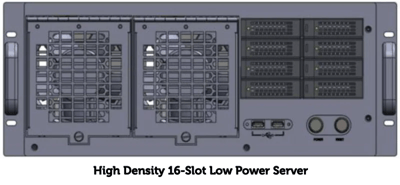
At I/ITSEC we introduced our newly released High-Density 16-Slot Server, which immediately resonated with teams looking for multi-card capability and low-power servers in a long-life, stable platform.
We’re showcasing the system again at AIAA's SciTech in Orlando on January 12–16 at Booth #112 alongside updated configurations for simulation workloads, virtualization projects, and secure on-prem AI environments.
This high-density server is especially relevant for teams that need multi-card capability, long-term platform consistency, and manageable power demands without overbuilding around GPU-centric infrastructure.
If you didn’t get time with us at I/ITSEC, or want a deeper technical conversation, AIAA is the perfect opportunity.
Want to Connect?
We’re now booking meetings for AIAA. If you’d like to:
- Talk through modernization, virtualization, or long-life compute needs
- See the full 16-slot server in person
- Explore hardware options for AI-at-the-edge
Let’s get it on the calendar. 👉 Schedule a meeting with us ahead of AIAA. We hope to see you there!

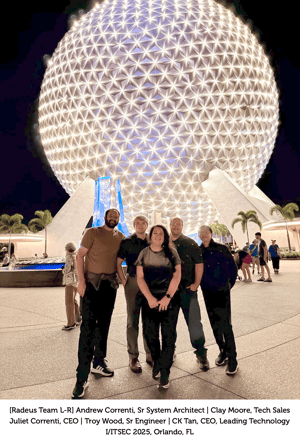
 Over the past few weeks, the Radeus Labs team has been on the road connecting with customers, partners, and new industry contacts. Computing and Recording Specialist Clay Moore attended