

.png)
 If you’re designing what comes next in flight, from smarter maintenance systems to autonomous air platforms and AI servers, the 2025 AIAA AVIATION Forum is where your work takes flight.
From July 21–25, the aviation community touches down in Las Vegas for one of the most comprehensive events in aerospace innovation—co-located with ASCEND 2025, the premier interdisciplinary space event focused on accelerating humanity’s off-world future.
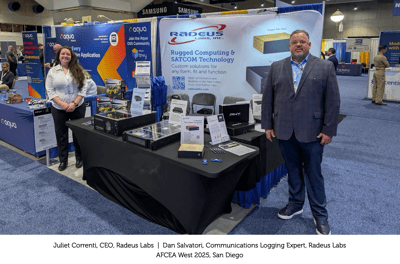
Radeus Labs will be there, at Booth #723, showcasing rugged, production-ready computing solutions and high-density, low power servers purpose-built for high-performance aerospace and defense environments. Whether you’re refining a prototype or launching a next-gen platform, we’re here to help you build the systems your mission demands for aerospace and military applications.
From Concept to Reality: A Hub for Aerospace Innovators
 Organized by the American Institute of Aeronautics and Astronautics (AIAA), the AVIATION Forum is where visionary ideas collide with engineering expertise. Nearly 3,800 aviation and space professionals will gather to bridge the gap between next-gen aircraft and real-world deployment, and to accelerate both in-atmosphere and off-world progress through hands-on collaboration.
One of the hallmarks of the event is its deep technical exchange. With nearly 1,300 technical papers presented by researchers, students, and industry experts—and awards given for the best student-led presentations—the forum is a breeding ground for fresh thinking and actionable breakthroughs.
Bringing together over 75 aerospace exhibitors in a focused, high-impact environment, the show is a prime opportunity for engineers, program leaders, and innovators to connect and explore the technologies shaping the future of flight and space exploration with computing systems built for demanding environments.
Conference Spotlight: A Glimpse of Key Topics
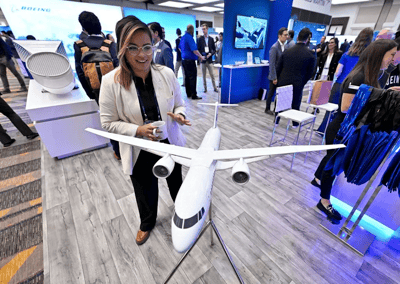 The AVIATION Forum offers insights for every corner of the aerospace and defense ecosystem. A few can’t-miss sessions include:
- AI and Predictive Maintenance in Aeronautics – A look at how artificial intelligence is driving autonomous flight and smarter, safer maintenance practices.
- AIAA Wright Brothers Lectureship in Aeronautics – An exploration of the rise of hybrid electric aircraft and their transformative potential for sustainable flight.
- Airship Operations Panel – Insights into ground handling and flight testing for both prototype and commercial airship missions.
- High Altitude Operations: Unlocking the Stratosphere’s Potential – A dive into airspace management challenges as stratospheric aircraft evolve in the commercial sector.
- Path to Autonomy in Aviation Panel – A look at strategies for building public trust and broader accessibility in the advanced air mobility (AAM) ecosystem.
Speaker Spotlight: A Few of the Experts to Look Out For
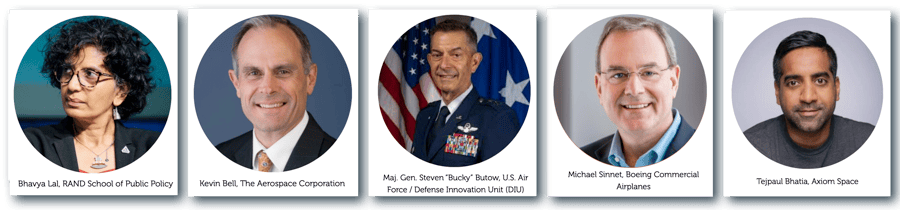
There is a powerhouse of perspectives across research, policy, and commercial innovation planned. Some of the lineup includes:
- Bhavya Lal – RAND School of Public Policy: Space policy, governance, and strategic planning
- Kevin Bell – The Aerospace Corporation: Aerospace systems, mission assurance, and technology innovation
- Maj. Gen. Steven “Bucky” Butow – U.S. Air Force / Defense Innovation Unit (DIU): National security and emerging defense technologies
- Michael Sinnet – Boeing Commercial Airplanes: Product development and development programs
- Tejpaul Bhatia – CEO, Axiom Space: Commercial space station development and private-sector spaceflight
Connect With Radeus at the Show!
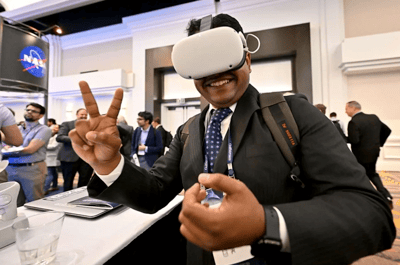 Don't miss us at Booth #723, showcasing Radeus Labs’ Simulators, Thin Clients, Virtual Machines, Image Generators, AI-ready servers, and secure peripherals designed for simulation, training, and other mission-critical aerospace environments.
Whether you're working on high-altitude autonomy, flight software validation, or next-gen defense systems, stop by and see how our solutions support the demands of modern aerospace and defense operations.
Want to dive deeper? Schedule a meeting at the show with our CEO Juliet Correnti and team to explore how Radeus can help you build faster, operate smarter, and deploy with confidence. See you at the show!

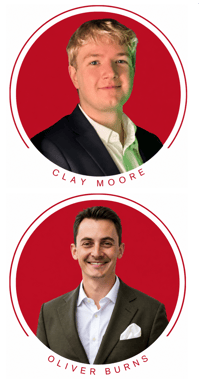 Over the past few weeks, the Radeus Labs team has been on the road connecting with customers, partners, and new industry contacts. Computing and Recording Specialist Clay Moore attended